AVERAGE ENERGY SAVING
60%
AVERAGE RETURN ON INVESTMENT
3 Years
REDUCTION OF MAINTENANCE COST
250%

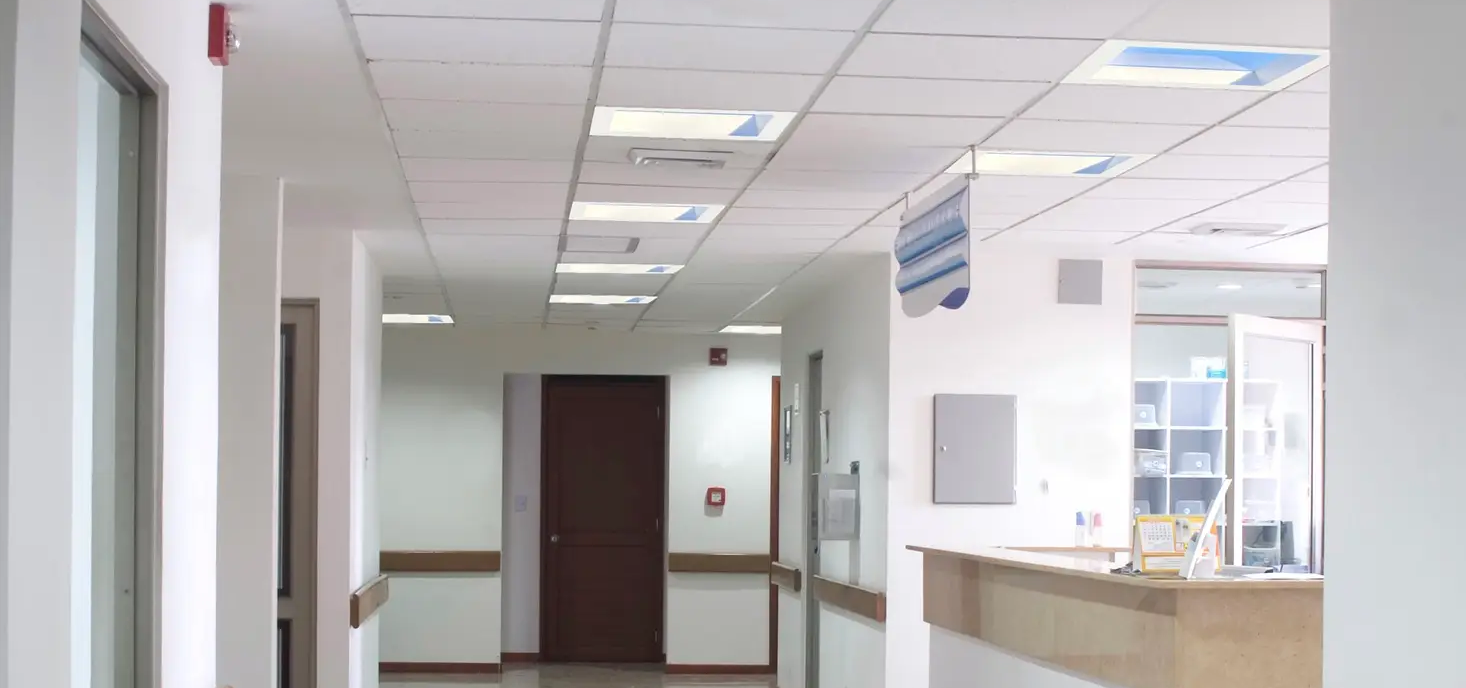
NatureConnect skylight brings the feeling of daylight indoors

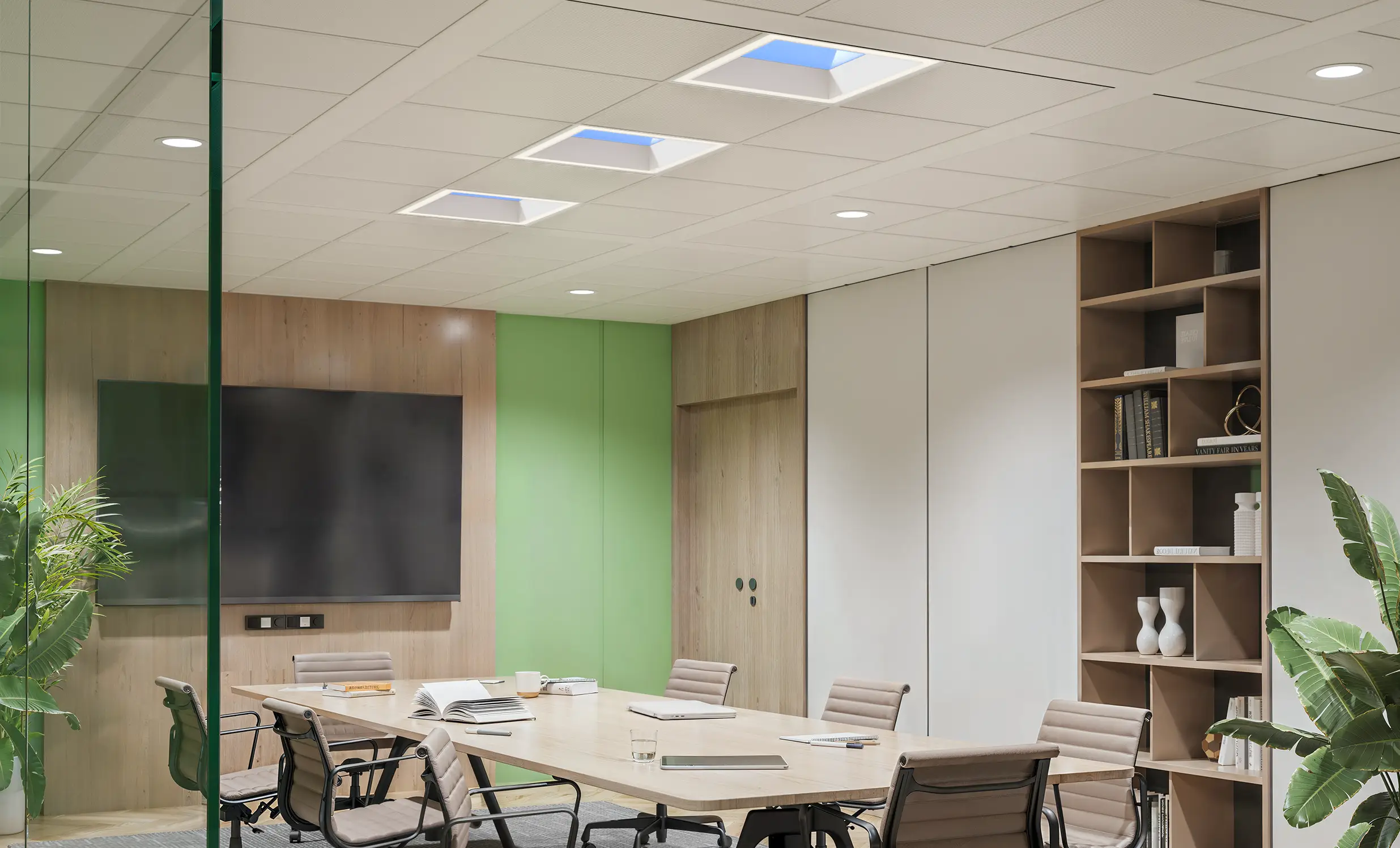
Connected Light is introducing the Philips NatureConnect skylight, an advanced lighting solution from Philips Lighting and Signify designed to recreate the appearance, depth and changing character of natural daylight indoors.

Unlike basic ceiling panels printed with cloud graphics, the NatureConnect skylight combines a convincing view of the sky with functional, controllable lighting. The result is a ceiling installation that looks remarkably realistic while providing the light needed for the space below.

Connected Light is already using the technology on live projects and has installed a demonstration unit in its own office.

What this article is about

The Philips NatureConnect skylight uses specialist LED technology and lighting controls to bring a daylight experience into rooms where windows, rooflights or sufficient natural light may not be available.

Key features include:

  • A realistic impression of blue sky and daylight
  • Tunable white lighting that changes throughout the day
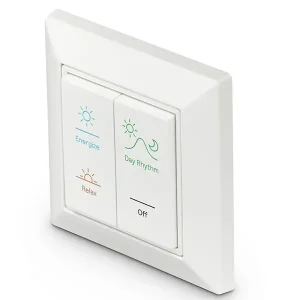
  • Day rhythm, Relax and Energize lighting scenes
  • Functional light output of up to 6,600 lumens
  • Options for suspended, plasterboard and ceiling-grid installations
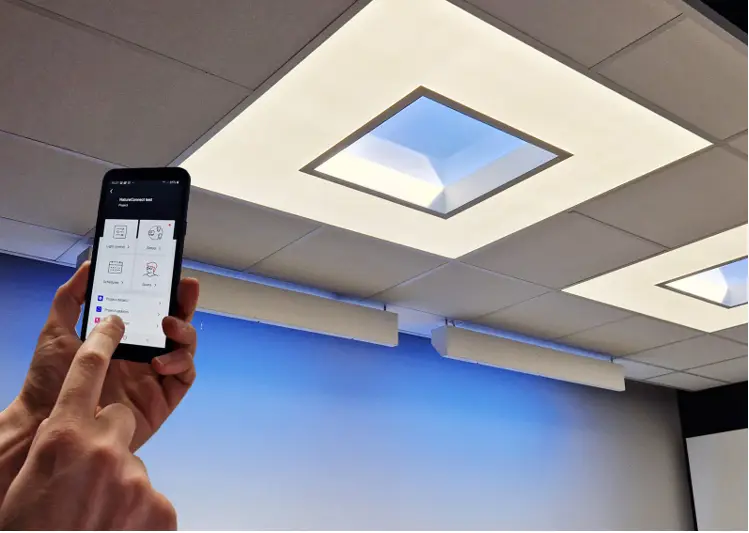
  • Controls that can coordinate several luminaires across one area

More than a decorative sky panel

There are many artificial skylights on the market, but the effect can vary considerably. Some are little more than illuminated flat panels with a cloud image placed over the surface.

The Philips NatureConnect skylight works very differently.Philips Lighting, through Signify, describes the system as creating the illusion of a view to the sky while increasing the feeling of space. The light can move from a cooler, energising setting to a warmer, more relaxed scene according to the time of day.

Its sense of depth is what makes the technology immediately noticeable. Rather than looking like a graphic fixed to the ceiling, it creates the impression that daylight is entering the room from above.

Supporting a natural daily lighting rhythm

Light changes constantly outdoors. Morning light, bright daytime conditions and warmer evening light each have a different appearance.

Philips NatureConnect can reflect this pattern through its Day rhythm setting, adjusting brightness and colour tone as the day progresses. The system also provides Relax and Energize scenes, allowing the lighting to suit the activity, time and needs of the space.

This approach is often described as human centric or circadian lighting. It considers how lighting is experienced throughout the day, rather than providing one fixed output from morning until evening.

The product is not a medical device or a replacement for natural daylight. Its value lies in creating a more natural, comfortable and visually engaging indoor environment.

Where could a NatureConnect skylight be used?

The technology is particularly suited to internal and windowless rooms where access to daylight is limited.

Potential applications include:

  • Healthcare and dementia-care environments
  • Treatment rooms and waiting areas
  • Offices and meeting rooms
  • Classrooms and lecture spaces
  • Hotels, gyms and wellness facilities
  • Basements, corridors and enclosed reception areas

Signify specifically identifies healthcare, offices, education and hospitality as suitable applications. In healthcare settings, the system is intended to create a pleasant and supportive environment for patients and staff who may spend long periods indoors.

Designed as functional lighting

The Philips NatureConnect skylight does more than create a visual effect. It can also replace conventional luminaires and provide functional illumination within the room.

The professional skylight offers up to 6,600 lumens at 75 watts, CRI 90 colour rendering and UGR19 performance at its default start-up output. It can fit standard 600 mm ceiling grids, be suspended beneath open ceilings or installed using a plaster ceiling set.

Connected Light can provide skylight design and technical support for client projects from the earliest design stage through to installation and commissioning. Our team can advise on product selection, layout, lighting levels, control strategy and integration, helping clients understand how Philips NatureConnect can work within the wider lighting scheme.

Whether the requirement is for a single skylight or a coordinated installation across multiple rooms, Connected Light can support consultants, contractors and end clients with the technical detail needed to develop the right solution.

Why you can trust Connected Light

Connected Light specialises in professional lighting design, smart lighting controls and the integration of dynamic lighting systems.

Having installed the NatureConnect skylight within its own office, the team can demonstrate the effect and explain how the product differs from simpler illuminated sky panels.

Connected Light can provide Philips NatureConnect skylight design, technical support, product selection, control specification, installation and commissioning, helping clients develop a complete system that responds naturally throughout the day.

Related Articles

We’re proud to collaborate with Connected Light, a team that shares our passion for smart, flexible, and future-ready lighting solutions. Their deep market knowledge and hands-on approach make them a perfect partner to bring the power of Casambi to projects across the UK.... Read More

David Bradshaw - Sales Manager UK - CASAMBI -

As a member of BS 5266 I am so excited to see such suitable, diligent, compliant processing from Connected Light. BS 5266 pt. 1 is a Code of practice for the emergency lighting of premises.... Read More

Ian Watts - CIBSE Trainer, Convener of BS5266 committee board and ICEL Council -

I have recently been working with Connected Light on a number of Lifecycle projects in the education sector and they have been great to work with, from conception and scoping works through to the delivery and installation.... Read More

Dani Timbrell - Facilities Management Project Manager -

AVERAGE ENERGY SAVING
60%
AVERAGE RETURN ON INVESTMENT
3 Years
REDUCTION OF MAINTENANCE COST
250%

Connected Light Achieves Cyber Essentials Plus

Connected Light has achieved Cyber Essentials Plus certification, strengthening its commitment to cyber security, trusted project delivery and supplier assurance across the business.

Cyber Essentials Plus is the next level up from Cyber Essentials. It includes independent technical testing and provides greater assurance that an organisation has implemented the controls needed to protect against common online threats.

For Connected Light, the certification is an important step in supporting clients across sensitive, technical and compliance-led environments. The company works with defence, MOD, Government secure sites, data centres, public sector organisations, healthcare settings, education providers and commercial facilities.

Reassurance for sensitive and secure projects

Cyber Essentials Plus is particularly relevant for clients and project partners operating in:

  • Defence and MOD environments
  • Government secure sites
  • Data centres and critical infrastructure
  • NHS, council and public sector organisations
  • Banks and large corporations

Achieving Cyber Essentials Plus gives clients additional confidence that Connected Light has taken practical steps to protect its systems, data and digital processes.

It also supports supplier assurance during procurement, onboarding and project compliance checks, particularly where work involves secure sites, public sector estates, data-sensitive operations or complex technical infrastructure.

Matt Holway, director at Connected Light, said:

“Our work often involves complex, sensitive and technically demanding environments, so it is important that clients can trust the way we operate. Achieving Cyber Essentials Plus certification reflects our commitment to high standards, responsible project delivery and continuous improvement across the business.”

Supported by Enhanced Group

Connected Light was supported through the Cyber Essentials Plus certification process by its IT solutions partner, Enhanced Group in Bristol.

Matt added:

“Cyber Essentials Plus gives clients further reassurance that we take cyber security seriously. For the sectors we support, protecting data and working to recognised standards is an important part of being a trusted project partner.”

Related Articles

I have been a customer of Connected Light for over 15 years, they have worked on several large projects providing design and installation with great results and huge energy savings.... Read More

Barry Saunders - St Monica’s Trust -

We’re proud to collaborate with Connected Light, a team that shares our passion for smart, flexible, and future-ready lighting solutions. Their deep market knowledge and hands-on approach make them a perfect partner to bring the power of Casambi to projects across the UK.... Read More

David Bradshaw - Sales Manager UK - CASAMBI -

As a valued partner, Connected Light has consistently demonstrated their commitment to delivering sizable projects of lighting controls into various industries, including blue chip clients, retail, and hospitality.... Read More

Owen Basara-Hamilton - UK Sales Manager - Casambi Technologies OY -

AVERAGE ENERGY SAVING
60%
AVERAGE RETURN ON INVESTMENT
3 Years
REDUCTION OF MAINTENANCE COST
250%

How energy-efficient lighting can help NHS estates reduce costs and carbon

Energy efficient lighting for NHS estates is about more than replacing fluorescent fittings with LEDs. Hospitals and other healthcare buildings operate for long hours, contain spaces with different requirements and often rely on lighting installed at several stages of an estate’s development.

A successful upgrade must consider the complete system, including existing fittings, how each area is used, controls, emergency lighting, maintenance access and the practicalities of working around clinical activity.

For NHS estates teams, facilities managers, sustainability leads and M&E consultants, the objective should be measurable long-term improvement rather than a simple like-for-like replacement.

What this article is about

This article explains where hospitals may be wasting lighting energy and how a planned combination of LED lighting, controls and commissioning can improve performance. It also covers the information an NHS lighting energy survey should collect, the factors that strengthen a project business case and the practical considerations involved in delivering upgrades across operational healthcare environments.

Why hospital lighting remains an important estates issue

Hospital lighting must support clinical, administrative and public areas that operate to different schedules. Wards and circulation routes may be used throughout the night, while offices, stores and other rooms may be occupied intermittently.

Energy can be wasted where ageing fluorescent fittings remain in use, lights operate at full output in empty areas or controls no longer reflect how departments work. Sensors may be overridden, schedules may be outdated and large areas may be grouped into a single zone despite having different occupancy patterns.

Lighting can also become inefficient when the use of a room changes but its fittings and controls remain untouched. Reviewing lighting as part of wider maintenance and improvement planning can therefore reveal opportunities to reduce energy use while retaining suitable visibility and control.

The NHS Green Plan Guidance identifies LED lighting among the energy-efficiency measures available to NHS estates and encourages organisations to connect energy improvements with planned upgrades and backlog maintenance.

How energy-efficient hospital lighting reduces demand

A properly designed NHS LED lighting upgrade can lower the connected electrical load and improve how light is distributed. Better optical control may allow suitable illumination to be achieved without relying on excessive output.

Longer replacement cycles can also reduce routine lamp changes and maintenance access, particularly in areas requiring specialist equipment, temporary closure or coordination with clinical teams. Modern LED lighting for hospitals can be combined with occupancy detection, daylight response, dimming and scheduling, so savings are not limited to the efficiency of the light source.

However, one-for-one replacement is not always the best option. The existing layout may produce excessive or uneven illumination, while some fittings may be suitable for refurbishment or retrofit. Controls, emergency lighting and the current use of each space should be reviewed before the upgrade approach is selected.

What an NHS lighting energy survey should include

An energy survey should establish how the current installation performs before savings or project costs are calculated. It should record:

  • fitting types, wattages, condition and location
  • connected lighting load and typical operating hours
  • occupancy patterns and daylight availability
  • existing sensors, schedules, zones and manual controls
  • illumination levels and the requirements of each space
  • emergency-lighting provision
  • maintenance history and access costs
  • the condition of supporting infrastructure
  • opportunities to retain, refurbish or retrofit equipment

The survey should also identify areas where room use has changed since the lighting was designed. Its findings can then support comparisons between full replacement, partial replacement, retrofit, new controls or recommissioning. This helps ensure the business case reflects the actual estate rather than generic assumptions.

Why NHS lighting controls and commissioning are essential

Efficient fittings reduce electrical load, but NHS lighting controls determine how long they operate and at what output. Occupancy detection can reduce unnecessary use in intermittently occupied spaces, while daylight-linked dimming, scheduling and zoning can adapt output to local conditions. Staff overrides remain important where automatic settings do not suit an immediate clinical task.

The right solution may involve DALI, wireless controls, scene setting or central monitoring. Connected Light’s smart lighting control systems service considers the building, infrastructure and users rather than promoting one standard technology.

Poor sensor positioning, unsuitable time delays, incorrect schedules and broad zones can undermine expected savings. Existing controls may also need recommissioning when occupancy patterns change.

The CIBSE LG14 guidance on lighting controls covers consultation, design, specification, commissioning, handover and user needs. Thorough lighting control commissioning should confirm that the system responds as intended, supported by clear training and handover information.

Planning and delivering a hospital lighting retrofit

A hospital lighting retrofit should begin with evidence from the site survey. The findings can inform lighting calculations, the control strategy, emergency-lighting requirements and decisions about which assets should be retained, refurbished or replaced.

A typical project may include:

  1. Site and asset surveys
  2. Lighting design and calculations
  3. Control strategy development
  4. Emergency-lighting review
  5. Product or retrofit selection
  6. Business-case preparation
  7. Phased installation
  8. Commissioning and handover

Delivery planning is especially important in an operational hospital. Clinical schedules, restricted access and infection-control procedures may limit when contractors can enter individual areas. Noise, dust, temporary lighting, safe routes and the movement of equipment must also be managed.

Some work may be completed outside normal hours, while larger programmes may progress department by department. Clear communication between estates teams, clinical departments, consultants and contractors helps control unavoidable disruption. Connected Light provides healthcare lighting solutions for NHS facilities from survey and design through to controls and commissioning.

Creating an evidence-based lighting business case

A credible business case should reflect the actual estate rather than standard savings percentages. It may consider:

  • current annual lighting energy use
  • expected operating hours after the upgrade
  • potential control savings
  • maintenance and access costs
  • product and system life
  • installation and phasing costs
  • carbon reduction and lifecycle value
  • estimated payback period

Assumptions should be recorded clearly. Expected control savings, for example, should reflect how often each space is genuinely unoccupied rather than applying one percentage across the hospital.

The NHS Property Services LED lighting programme provides an example of sites being assessed using project costs and potential savings before investment decisions were made. Its results relate to that programme, but the approach demonstrates the value of survey-led prioritisation and phased investment.

Verifying performance after commissioning

Commissioning is not simply a final switch-on exercise. Sensor responses, schedules, dimming levels, zones and staff overrides should be checked against the design and how each department is used.

Where monitoring is available, estates teams can compare actual operation with the business-case assumptions. Unnecessary use or overlighting should be corrected, and any changes documented so the system can be maintained without losing the original strategy.

Why you can trust Connected Light

Connected Light combines healthcare project experience with knowledge of lighting design, controls, emergency lighting and commissioning. Its manufacturer-independent approach allows solutions to be selected around the estate, users and project requirements.

The team understands the practical challenges of operational environments and can support NHS estates teams, facilities managers, consultants and contractors at different project stages.

How Connected Light supports NHS lighting upgrades

Connected Light supports healthcare lighting upgrades through surveys, technical assessments, design, LED planning, controls, commissioning and emergency-lighting reviews. The team can also help coordinate phased installation, handover and technical support.

NHS teams and M&E consultants can discuss an existing installation, planned refurbishment or wider lighting programme with Connected Light.

Frequently asked questions


How much energy can NHS hospitals save by upgrading their lighting?

Savings depend on existing fittings, operating hours, occupancy and controls. A detailed survey is needed before credible projections can be made, rather than applying a standard percentage across the estate.

Is LED lighting suitable for all areas of a hospital?

LED lighting can suit many hospital areas, but the specification must reflect the task, visual comfort, colour rendering, glare, controls, maintenance and emergency-lighting requirements.

How do hospital lighting controls reduce energy use?

Controls can reduce unnecessary use through occupancy detection, daylight-linked dimming, scheduling and zoning. Correct design and commissioning are essential so energy-saving settings remain practical for clinical teams.

Can hospital lighting upgrades be completed in phases?

Yes. Work can often progress department by department or alongside wider refurbishment, subject to clinical activity, access, infection-control procedures, temporary arrangements and testing.

What should an NHS lighting energy survey include?

The survey should review fittings, load, controls, operating hours, occupancy, daylight, illumination levels, emergency lighting, maintenance and access. It should also identify retrofit and asset-retention opportunities.

How long does a hospital LED lighting retrofit take?

Timescales depend on estate size, project scope, controls, access and clinical constraints. A small department may be completed quickly, while estate-wide work may require several planned phases.

Related Articles

As a long-standing partner of ConnectedLight, Signify Commercial UKI is proud to be associated with such an adaptable and innovative company. ConnectedLight's expertise in lighting services,... Read More

Ella Stuart - Customer Order Manager - Signify -

Connectedlight have worked for ETS designing and supplying lighting systems that deliver full turnkey projects repeatedly building up a valued trust between the companies.... Read More

Simon Jeanes - Contracts Manager - ETS Group -

As a valued partner, Connected Light has consistently demonstrated their commitment to delivering sizable projects of lighting controls into various industries, including blue chip clients, retail, and hospitality.... Read More

Owen Basara-Hamilton - UK Sales Manager - Casambi Technologies OY -

AVERAGE ENERGY SAVING
60%
AVERAGE RETURN ON INVESTMENT
3 Years
REDUCTION OF MAINTENANCE COST
250%

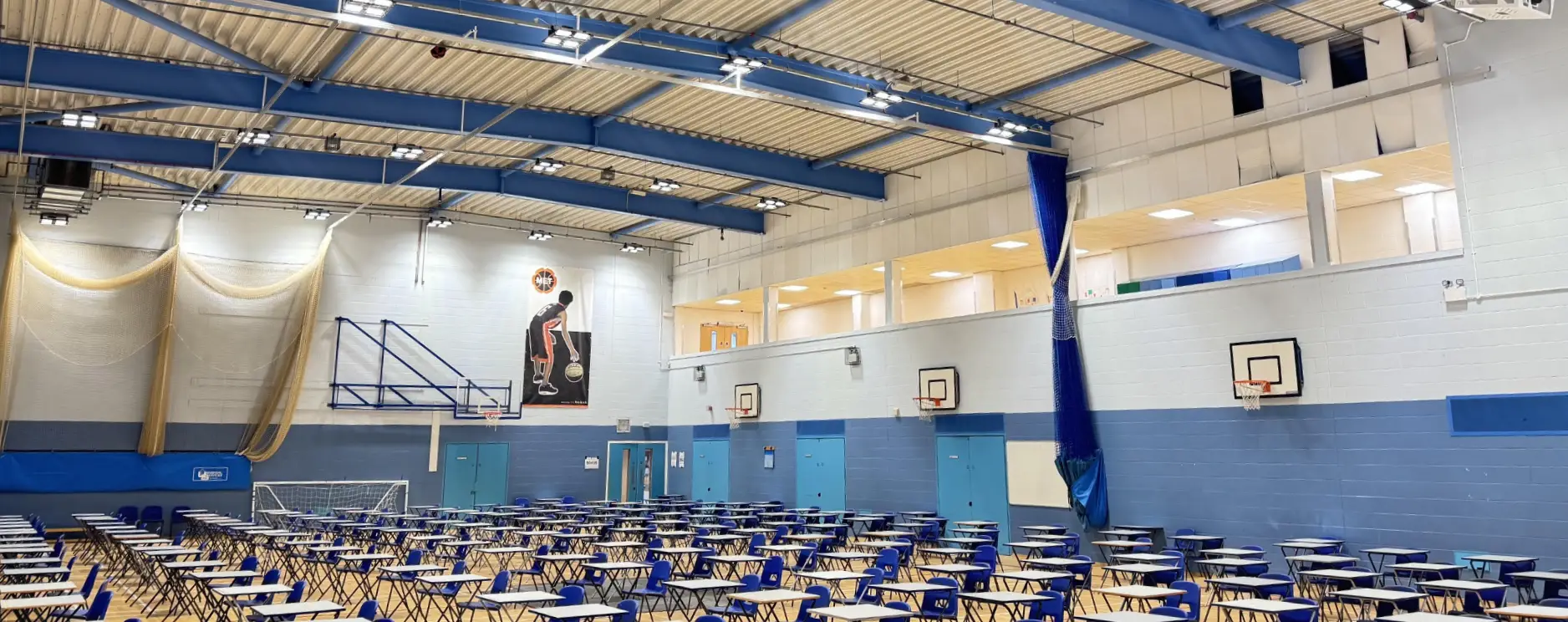
Why outdated school lighting is costing more than you think

Outdated school lighting often hides in plain sight. It switches on each morning, keeps classrooms usable and may only attract attention when a fitting fails, a room is refurbished or energy bills start to rise. But lighting that still works is not always lighting that works well.

For school business managers, estates teams, facilities managers and multi-academy trusts, lighting is part of a wider estates picture. Older fluorescent fittings, poor zoning, limited controls and repeated maintenance all add pressure to budgets and site teams. They may also make classrooms, corridors, halls and shared areas feel tired, inconsistent or harder to manage across a busy school day.

The costs rarely appear all at once. A replacement lamp here, a contractor visit there, a classroom that stays fully lit when daylight is already strong. Over time, outdated school lighting becomes a quiet drain on energy, maintenance time and long-term estate planning.

What this article covers

This article explains why older school lighting can cost more than expected, covering energy use, old fluorescent lighting in schools, maintenance, lighting quality, controls, disruption and upgrade planning. It is not about replacing lighting for the sake of it. It is about knowing when a planned school lighting upgrade becomes more sensible than reactive repairs.

The hidden energy cost of outdated lighting

Energy use is usually the first cost schools think about, but the issue is not just the wattage of each fitting. It is how the whole lighting system behaves during a normal school day.

Older systems often use more electricity than modern LED alternatives. They also waste energy through poor zoning, limited switching and little or no daylight response. A classroom may be fully lit even when daylight is strong. Corridors, toilets, stores and shared spaces may stay lit long after they are empty. Sports halls, dining areas and staff spaces may be controlled in large groups rather than useful zones.

That matters because estate decisions need to work harder. The Department for Education’s sustainability and climate change strategy includes reducing emissions from education and care buildings as part of the move towards a more sustainable education estate. Lighting is only one part of that picture, but it is a practical area where inefficiency can be reviewed, measured and addressed.

Why old fluorescent lighting is becoming harder to ignore

Many schools still rely on fluorescent fittings installed years ago. Staff are used to them. Site teams know how they behave. But familiarity is not the same as long-term suitability.

Old fluorescent lighting in schools creates practical problems. Lamps fail. Diffusers become tired. Light quality varies from room to room. Replacement work can interrupt teaching spaces, require access equipment or create extra pressure for site teams. Stock availability also becomes more difficult as the market continues to move away from older lamp types.

There is also a wider regulatory and supply-chain context. The UK Government has confirmed that RoHS exemptions for several fluorescent lamp types expired on 1 February 2024, including examples such as T5, T8 and T12 double-capped linear fluorescent lamps. For schools, this does not mean every fitting changes overnight, but it does make old fluorescent lighting harder to ignore as a long-term maintenance strategy.

Maintenance costs add up over time

The cost of outdated lighting is not limited to electricity. Maintenance is often the quieter issue.

Old lighting rarely fails all at once. It creates a slow drip of work: lamps to replace, diffusers to clean or repair, control gear faults to investigate, high-level fittings that need access equipment and repeated visits to areas that never quite stay fixed.

Across a school estate, these jobs add up. Site teams are already managing heating, security, grounds, compliance checks, cleaning and day-to-day repairs. Every recurring lighting issue takes time away from other priorities. This is why working lighting can still be expensive lighting.

Poor lighting can affect the learning environment

Lighting quality matters because schools are active, varied environments. A classroom is not used in one way all day. Staff may need good visibility for written work, screen use, displays, presentations, group tasks, exams, cleaning and after-school activity.

When lighting is outdated, the problem is not always dramatic. It may simply make spaces feel dim, uneven or tired. Glare can make some areas uncomfortable. Flicker or inconsistent illumination may become irritating. Poor visibility on boards, screens or practical work areas can make rooms harder to use.

Lighting alone does not transform educational outcomes. But classroom lighting improvements can support comfort, visibility and usability, while helping spaces feel more cared for and easier to manage.

Lighting controls can reduce wasted energy

A school lighting upgrade is not only about replacing fittings. Controls make a major difference to how efficiently lighting is used each day.

Lighting controls for schools can include occupancy sensors, daylight harvesting, dimming, zoning and scene setting. In simple terms, they help lighting respond to the space. A corridor does not need to behave like a classroom. A toilet block does not need lights running constantly if it is empty. A sports hall may need different settings for lessons, exams, assemblies or evening use.

The best controls are practical. They reduce waste without making daily use more difficult for staff. That is where design and commissioning matter. Connected Light provides lighting control commissioning to help make sure systems are configured, tested and adjusted to suit the building.

The cost of waiting too long

Schools often delay lighting upgrades for understandable reasons. Budgets are tight, staff are busy and the system may still appear to work. In many cases, lighting is only reviewed when failures become frequent, rooms are refurbished or energy costs force a closer look.

The risk is that waiting reduces control over timing and cost. A planned upgrade can be surveyed, costed, phased and coordinated with school holidays, wider refurbishment work or estate priorities. A reactive replacement is usually more awkward, with fewer options and less opportunity to think about controls, emergency lighting, energy use or long-term maintenance.

The Department for Education’s guidance on good estate management for schools highlights the importance of managing school buildings effectively to save money and support safe, sustainable environments.

How schools can plan lighting upgrades without major disruption

One reason schools delay lighting work is the fear of disruption. Classrooms are occupied, corridors are busy, safeguarding has to be considered and spaces such as halls, dining areas and sports facilities are often used beyond the normal school day.

The answer is planning. A lighting survey can identify which areas need attention first, which fittings are causing the greatest problems and where energy efficient lighting for schools will deliver the most practical value. From there, upgrades can be phased around high-use areas, holiday periods, weekends or out-of-hours working where appropriate.

Connected Light supports schools with professional lighting design and turn-key project solutions that bring survey, specification, supply, installation, commissioning and handover into one planned process. At Frampton Cotterell Primary School, Connected Light completed a lighting upgrade during the summer holiday period, improving illumination while helping reduce safety risks and disruption.

What to review before upgrading school lighting

Before committing to LED lighting upgrades for schools, it is worth building a clear picture of the existing system. A useful review should look beyond whether the lights still turn on.

Start with the main fitting types across classrooms, corridors, halls, toilets, dining areas, external routes and specialist spaces. Check maintenance records, repeated faults, contractor visits and areas where lighting quality has become poor or inconsistent. Energy use should be considered alongside hours of operation, control arrangements and whether lights are often left on in empty rooms.

Emergency lighting should not be left out, especially if layouts, occupancy patterns or fire risk assessments have changed. Controls and sensors should also be reviewed where better zoning, daylight response or occupancy detection could reduce wasted energy. Finally, timing matters. Future refurbishment plans, funding cycles, decarbonisation priorities and term dates can all influence the best route forward.

Why you can trust Connected Light

Connected Light brings more than 40 years of lighting experience to education, commercial and public-sector projects. Our team understands that schools need practical advice, not generic promises. Lighting upgrades must work around budgets, building use, safety, compliance and the daily rhythm of education sites.

That experience includes measurable education projects. At Bradley Stoke Community School, a lighting upgrade delivered first-year savings of £21,428, a 4.5-year payback and a 65% classroom energy saving. At UWE The Foundry, high-efficiency LED lighting was supported by sensors and smart controls.

When to speak to a school lighting specialist

A school lighting specialist can be useful when existing lighting is ageing, unreliable, costly to run or difficult to maintain. It is also worth seeking advice when classrooms feel dim or inconsistent, controls no longer suit how spaces are used, or planned refurbishment work creates an opportunity to review lighting properly.

Compliance concerns are another important trigger. If emergency lighting has not been reviewed recently, building layouts have changed or responsibilities are unclear, professional support can help schools understand what needs attention.

If your school is reviewing outdated lighting, Connected Light can help assess your current system and plan practical education lighting upgrades. Learn more about our lighting solutions for schools.


Related Articles

As a valued partner, Connected Light has consistently demonstrated their commitment to delivering sizable projects of lighting controls into various industries, including blue chip clients, retail, and hospitality.... Read More

Owen Basara-Hamilton - UK Sales Manager - Casambi Technologies OY -

I've been a Client of Connected Light when working as a Project Manager for two NHS Trusts in Bristol over the past three years. Every interaction with Matt and the wider team at the company is a positive one... Read More

James Day - Project Manager - Multiple NHS Trusts -

I have recently been working with Connected Light on a number of Lifecycle projects in the education sector and they have been great to work with, from conception and scoping works through to the delivery and installation.... Read More

Dani Timbrell - Facilities Management Project Manager -

AVERAGE ENERGY SAVING
60%
AVERAGE RETURN ON INVESTMENT
3 Years
REDUCTION OF MAINTENANCE COST
250%

Connected Light strengthens cyber security commitment with Cyber Essentials

Connected Light has achieved Cyber Essentials certification, strengthening its commitment to cyber security, trusted project delivery and supply chain assurance.

Cyber Essentials is the minimum standard of cyber security recommended by the UK Government for organisations of all sizes. Developed by the National Cyber Security Centre, the scheme is aligned to five technical controls designed to protect businesses against the most common internet-based cyber security threats.

For Connected Light, certification is an important step in supporting clients across sensitive, technical and compliance-led environments. The company works with defence, MOD, Government secure sites, data centres, public sector organisations, healthcare settings, education providers and commercial facilities.

The certification provides clients, contractors and project partners with additional confidence that Connected Light has taken practical steps to protect its systems, data and digital processes.

It also supports supplier assurance for organisations that require or value recognised cyber security standards, including:

  • Defence and MOD environments
  • Government secure sites
  • Data centres and critical infrastructure
  • NHS, councils and public sector organisations
  • Banks and large corporations

Matt Holway, director at Connected Light, said:

“Our work often involves complex, sensitive and technically demanding environments, so it is important that clients can trust the way we operate. Achieving Cyber Essentials certification is part of our wider commitment to high standards, responsible project delivery and continuous improvement across the business.”

This is particularly valuable for clients assessing suppliers on security, resilience and operational readiness standards.

Connected Light was supported through the certification process by its IT solutions partner, Enhanced Group in Bristol. The company is now progressing towards Cyber Essentials Plus, which includes more rigorous independent technical testing.

Matt added:

“Cyber Essentials is not just about meeting a requirement. It shows clients that we understand the importance of cyber security and are taking practical steps to protect the way we work.”

Achieving Cyber Essentials also supports Connected Light’s wider supplier assurance work, giving clients greater confidence during procurement, onboarding and project compliance checks, particularly in secure, public sector, data-sensitive and technically complex environments.

Related Articles

I've been a Client of Connected Light when working as a Project Manager for two NHS Trusts in Bristol over the past three years. Every interaction with Matt and the wider team at the company is a positive one... Read More

James Day - Project Manager - Multiple NHS Trusts -

As a valued partner, Connected Light has consistently demonstrated their commitment to delivering sizable projects of lighting controls into various industries, including blue chip clients, retail, and hospitality.... Read More

Owen Basara-Hamilton - UK Sales Manager - Casambi Technologies OY -

The service Connected Light offer to us is invaluable. They have access to a wide range of manufacturers and luminaires that enhance any lighting design, provide the back-up calculations, control philosophy and on-site commissioning.... Read More

Nick Hare - Director of Electrical Services - Brunel Integrated Services Ltd -

AVERAGE ENERGY SAVING
60%
AVERAGE RETURN ON INVESTMENT
3 Years
REDUCTION OF MAINTENANCE COST
250%

Emergency Lighting in Critical Spaces: A Guide to High Risk Area Lighting

Introduction: why high risk emergency lighting is widely misunderstood


Emergency lighting is most often associated with escape routes and exit signage. While that focus is essential, it does not address every risk present in a building. In some spaces, a sudden loss of light creates an immediate danger rather than a simple evacuation challenge. These spaces are high risk task areas, and they require a higher standard of emergency lighting.

Emergency lighting for high risk areas is frequently misunderstood because it looks compliant at a glance. Luminaires are installed, tests are recorded, and escape routes are illuminated. What is often missing is sufficient light at the point where hazardous tasks must be made safe before evacuation can occur. Escape lighting is not designed to illuminate machinery, tools, or control interfaces to a usable level.

This misunderstanding appears across many sectors, from schools and hospitals to industrial environments. When lighting fails, the first moments matter most. Without adequate emergency illumination, operators may be unable to shut down equipment safely, increasing the risk of injury before evacuation even begins.

What this article covers and who it is for


This article explains what high risk task area lighting is and how it differs from standard emergency escape lighting. It sets out how high risk areas are identified, the core lighting requirements that apply, and why these requirements are often missed in real buildings. It also explores common applications, system design challenges, and compliance considerations.

The content is intended for building owners, responsible persons, facilities managers, consultants, and project teams involved in non-domestic buildings. It is written to support practical decision-making, particularly when reviewing emergency lighting designs, fire risk assessments, or refurbishment plans where hazardous tasks are present.

What counts as a high risk task area

 

A high risk task area is a location where the sudden loss of lighting could expose people to harm and where sufficient emergency illumination is required to allow a task to be made safe before evacuation. The classification is not based on room type alone, but on what activities take place and the consequences of lighting failure.

Typical risk factors include moving machinery, sharp tools, press equipment, rotating components, high temperatures, hazardous substances, or electrical testing. In these environments, operators may need to isolate power, shut down equipment, or stabilise a process before leaving the area. Visibility of emergency stop buttons and the nearest point of isolation is therefore critical.

Identification of high risk task areas relies on emergency lighting risk assessment. This assessment should consider the task being performed, proximity to hazards, the people involved, and the likelihood of confusion or error if lighting fails. It should also account for whether occupants are familiar with the space and whether stress or time pressure could increase risk.

High risk task area lighting is often discussed alongside local area lighting because the requirement is focused and task-specific rather than general. Its purpose is not to allow work to continue, but to protect people by enabling safe shutdown and controlled movement away from danger.

Where buildings commonly fall short


One of the most common shortcomings is the assumption that emergency escape lighting automatically addresses all safety risks. In many buildings, emergency luminaires are installed to meet escape route requirements, but no consideration is given to whether hazardous tasks can actually be made safe when normal lighting fails. This results in systems that appear compliant but fail in practice.

Another frequent issue is poor alignment between risk assessment and lighting design. High risk tasks may be identified in principle, but the emergency lighting layout is not adapted to reflect them. As a result, light levels may be adequate at floor level while work surfaces, machinery controls, or isolation points remain poorly illuminated.

Emergency stop button lighting is a particular weakness. Emergency stop devices are often located on machinery, walls, or control panels that fall outside standard escape lighting zones. If these points are not specifically illuminated under emergency conditions, operators may struggle to locate or operate them quickly, increasing the risk of secondary incidents.

Value engineering also plays a role. Emergency lighting is sometimes reduced late in a project to save cost, without reassessing the impact on high risk task areas. Over time, changes to layouts, equipment, or processes can further erode compliance if lighting strategies are not reviewed. These issues are rarely obvious until a power failure or inspection exposes them.

The core requirements explained with real numbers

 

High risk task area lighting is governed by specific quantitative requirements that go well beyond those for standard emergency escape lighting. These requirements are set out within the UK emergency lighting British standard framework, most notably BS 5266-1, and they are frequently misunderstood in practice.

The central requirement is that emergency lighting in high risk task areas must provide at least 10 percent of the normal lighting level required for the task being carried out. This is commonly referred to as the 10 percent rule. Alongside this, there is an absolute minimum requirement of 15 lux, but in most environments where hazardous tasks are performed, the percentage-based requirement is the controlling factor.

Emergency lighting lux levels must be assessed at the task plane rather than at floor level. This distinction is critical. For example, if a workspace is designed to operate at 500 lux under normal conditions, the emergency lighting must deliver a minimum of 50 lux to the relevant work surface during a power failure. That level of illumination is necessary to allow operators to see hazards clearly, locate controls accurately, and complete shutdown procedures without error.

These figures help explain why many installations that appear compliant fall short when measured. Emergency lighting layouts are often designed around escape routes, with luminaires positioned and spaced to achieve minimum floor-level illuminance. When those same fittings are expected to provide task-level lighting, performance is frequently inadequate.

The challenge is compounded by system limitations. Self contained emergency luminaires may struggle to deliver higher output levels, particularly over time as batteries age and light sources depreciate. Without careful design and verification, the assumed emergency lighting performance may bear little resemblance to actual conditions during a power failure.

The detailed definitions, illuminance requirements, and performance criteria that underpin these calculations are set out across the relevant emergency lighting British Standards, which provide the accepted benchmark for demonstrating compliance and managing risk in high risk task areas.

Why 0.5 seconds matters in high risk environments


In high risk task areas, how quickly emergency lighting activates is just as important as how bright it is. The standard requires that emergency lighting in these areas activates within 0.5 seconds of a failure of the normal supply.

This requirement recognises that danger exists immediately when lighting is lost. Operators may be using rotating machinery, handling hazardous materials, or working close to moving parts. Even a brief delay can result in loss of control, misjudgement, or physical injury before the person has time to react.

Emergency lighting 0.5 seconds is therefore not a comfort-based requirement. It is a safety-critical response time designed to prevent escalation of risk in the first moments after a power failure. This is particularly relevant where tasks require fine motor control or precise interaction with equipment.

Unlike standard escape lighting, where short delays may be acceptable, high risk task area lighting must respond almost instantaneously. This has implications for system design, control integration, and commissioning. Designers must ensure that switching arrangements, control gear, and power supplies do not introduce delays that undermine the intent of the requirement.

High risk areas by sector: where this applies in practice


High risk task area lighting is not limited to specialist industrial sites. It appears across a wide range of sectors, often in spaces that are occupied daily but rarely reviewed in detail from an emergency lighting perspective.

In schools, high risk task area lighting commonly applies in design and technology rooms, woodwork workshops, and science laboratories. These spaces often contain sharp tools, rotating equipment, heat sources, or chemicals that require controlled shutdown before evacuation. Students and staff may be working close to hazards, making immediate visibility essential if normal lighting fails.

Hospitals and healthcare environments introduce different but equally significant risks. Treatment rooms, theatres, plant areas, and clinical support spaces may contain equipment that must be stabilised or isolated before staff can safely move away. In these settings, emergency lighting must support safe decision-making under pressure, often where patients or vulnerable occupants are present.

Industrial environments provide the most obvious examples. Production lines, saw mills, tool rooms, machine presses, and processing areas frequently involve moving parts and high-energy processes. High risk task area lighting in industrial settings must allow operators to locate controls, isolate power, and avoid secondary hazards immediately following a power failure. Familiarity with the environment does not remove the risk created by sudden darkness.

System design challenges and technology choices

 

Meeting the requirements for high risk task area lighting presents distinct design challenges, particularly where higher illuminance levels and rapid activation times are required. Systems that perform adequately for escape lighting may struggle to meet these demands without careful planning.

Self contained emergency lighting is widely used because it is flexible and relatively simple to install. However, self contained emergency lighting often relies on individual batteries that limit output and duration. Achieving higher task-level illuminance can require additional fittings or specialist luminaires, and performance can degrade over time as batteries age and light sources depreciate.

These limitations do not make self contained systems unsuitable, but they do require realistic assessment. Designers must consider whether the required light levels can be achieved at the task plane, not just assumed based on catalogue data or spacing rules.

In larger or more complex environments, a central battery emergency lighting system may offer advantages. Central battery systems can deliver higher and more consistent output, and in some configurations can maintain full output from general luminaires during emergency conditions. This can be particularly beneficial where tasks demand higher illuminance or where uniformity and reliability are critical.

System choice should always follow risk assessment rather than cost alone. Factors such as maintenance strategy, testing regime, environmental conditions, and long-term reliability all influence whether a self contained or central battery approach is appropriate for a given high risk area.

Design, verification, and compliance in practice


High risk task area lighting must be identified early and addressed through a coordinated design process. Risk assessment should inform where enhanced emergency lighting is required, while lighting calculations should confirm that illuminance levels and response times meet the standard in practice.

Verification is essential. It is not enough to assume that emergency lighting will perform as intended. Verification should confirm that luminaires activate within the required timeframe, that task-level illuminance is achieved, and that emergency stop buttons and isolation points are clearly visible under emergency conditions. Documentation of these checks is critical for demonstrating due diligence.

Ongoing compliance depends on structured testing, clear records, and periodic review. Changes to layouts, equipment, or processes can introduce new risks if emergency lighting strategies are not revisited. A managed approach to emergency lighting compliance helps responsible persons maintain confidence that systems remain suitable over time.

Routine inspections and functional checks form part of this process, alongside longer-term verification. Understanding current emergency lighting testing requirements supports effective maintenance planning and reduces the risk of issues being identified only during an incident or enforcement action.

Why you can trust Connected Light


Connected Light is an independent lighting consultancy focused on safety-critical and compliance-led environments, with extensive experience in the design and verification of emergency lighting systems. The team works closely with building owners and responsible persons to ensure that emergency lighting strategies are based on real risk rather than assumptions.

A key part of this approach is staying aligned with evolving standards, including the changes introduced by the BS 5266-1:2025 update. These updates place greater emphasis on performance, documentation, and accountability, particularly in complex buildings where high risk task areas exist.

Connected Light holds BAFE emergency lighting certification, providing third-party audited assurance that emergency lighting services meet recognised industry benchmarks. This certification supports duty holders in demonstrating due diligence and competence. The consultancy also provides clear guidance on regulatory changes, including a detailed overview of BS 5266-1:2025 explained for building owners and estates teams.

Conclusion: Reducing risk in critical spaces


Emergency lighting for high risk areas plays a critical role in protecting people where hazardous tasks cannot simply stop when power fails. Without adequate illumination, even well-managed buildings can expose occupants to unnecessary risk in the first moments of an incident.

By identifying high risk task areas early, applying the correct standards, and verifying performance in practice, organisations can move beyond surface-level compliance. Specialist support from Connected Light helps ensure emergency lighting strategies genuinely reduce risk in critical spaces rather than merely appearing compliant.

Related Articles

The RUH have a close working relationship with Connected Light, working on many projects, having provided equipment and technological advice for a large £1.4 million upgrade from fluorescent LED across the hospital estate.... Read More

Estates Officer – RUH, Bath -

Connected Light have always stepped up to the challenges of providing lighting solutions to meet their clients’ needs. Their dedicated team provide sound solutions for all challenging life science and industrial environments.... Read More

UKHSA - senior project management team -

I have recently been working with Connected Light on a number of Lifecycle projects in the education sector and they have been great to work with, from conception and scoping works through to the delivery and installation.... Read More

Dani Timbrell - Facilities Management Project Manager -

AVERAGE ENERGY SAVING
60%
AVERAGE RETURN ON INVESTMENT
3 Years
REDUCTION OF MAINTENANCE COST
250%

BS 5266-1:2025 Explained: What the New Emergency Lighting Standard Means for Building Owners

Introduction: why BS 5266-1:2025 matters now

The publication of BS 5266-1:2025 marks a significant moment for emergency lighting in the UK. Rather than a routine update, the revised standard reflects a broader shift in how life safety systems are expected to perform in modern buildings. As layouts become more complex and evacuation strategies more varied, emergency lighting is no longer viewed as a passive fallback but as an active part of building safety management.

For building owners and responsible persons, BS 5266-1:2025 raises the bar on clarity, consistency, and accountability. It strengthens expectations around how systems are designed, verified, and maintained over time, aligning emergency lighting more closely with real-world risk rather than historic assumptions. This matters not only for compliance, but for demonstrating due diligence in the event of inspection, audit, or incident.

Understanding what has changed, and why, is now essential. Organisations that continue to rely on outdated interpretations risk falling behind current best practice, increasing both safety exposure and regulatory risk as enforcement expectations evolve.

What is BS 5266-1:2025?

BS 5266-1:2025 is the latest edition of the UK code of practice for the emergency lighting of premises. It sets out recommendations for the design, installation, operation, and maintenance of emergency lighting systems to support safe evacuation, occupant protection, and continuity of critical activities during a loss of normal lighting.

The standard applies to most non-domestic buildings and communal areas, covering a wide range of environments from offices and retail premises to healthcare, education, and transport-related facilities. It provides a structured framework for assessing risk, determining appropriate lighting provision, and ensuring systems perform as intended throughout their lifecycle.

BS 5266-1:2025 is published by the British Standards Institution, whose role is to develop consensus-based standards that reflect legislation, European alignment, and practical industry experience. As the British Standards Institution explains, the 2025 revision expands the scope of emergency lighting, strengthens guidance on verification and documentation, and supports a more consistent approach to safety across different building types.

By following BS 5266-1:2025, organisations are better placed to align emergency lighting provision with UK fire safety expectations, demonstrating that systems have been designed and managed in line with current, recognised best practice.

Why BS 5266-1 was updated in 2025

The update to BS 5266-1 reflects how buildings, risks, and operational expectations have changed over time. Many modern premises are now multi-use, densely occupied, or reliant on progressive evacuation and stay-put strategies rather than simple full evacuation scenarios. Emergency lighting guidance needed to evolve to reflect these realities.

Another key driver was alignment with updated European standards, particularly EN 1838:2024 and EN 50172:2024. These standards place greater emphasis on photometric performance, verification, and consistency in how emergency lighting is measured and maintained. Bringing BS 5266-1 into closer alignment reduces ambiguity for designers, installers, and duty holders, and supports more predictable system performance.

Practical industry experience has also played a significant role. Issues such as battery degradation, circuit vulnerability, and inconsistent record keeping have highlighted gaps between theoretical compliance and real-world performance. The 2025 revision responds by reinforcing expectations around testing regimes, documentation, and system resilience.

This shift places greater importance on competence and governance. Independent assessment and third-party certification have become increasingly relevant as a way to demonstrate that emergency lighting systems are not only installed, but designed and managed by appropriately qualified professionals. Connected Light’s achievement of BAFE SP203-4 certification is one example of how third-party oversight supports the intent of BS 5266-1:2025 by providing audited assurance of competence, process, and compliance.

Scope expansion: escape lighting, local area lighting, standby lighting

One of the most important changes in BS 5266-1:2025 is the formal expansion of scope beyond emergency escape lighting alone. Earlier editions were primarily interpreted around evacuation scenarios, often leaving other forms of emergency illumination inconsistently specified or justified through risk assessment. The 2025 revision removes this ambiguity by clearly defining three distinct emergency lighting purposes.

Emergency escape lighting remains the foundation of the standard. Its role is to illuminate escape routes, exits, and key safety features so occupants can leave a building safely during an emergency. This includes corridors, stairways, changes in floor level, and final exits. In practice, escape lighting is the aspect most frequently scrutinised during inspections, which is why many organisations now rely on structured emergency lighting compliance frameworks rather than informal maintenance approaches.

Local area lighting is now explicitly recognised as a separate requirement. This form of lighting supports the safe shutdown of hazardous activities before evacuation can occur. Typical examples include plant rooms, control panels, laboratories, workshops, and areas containing moving machinery. The inclusion of local area lighting reflects the reality that immediate evacuation is not always the safest option, particularly in complex operational environments.

Standby lighting completes the expanded scope. Unlike escape lighting, standby lighting is designed to allow normal activities to continue during a loss of mains power. This is particularly relevant in healthcare, transport, data centres, and certain industrial environments where occupants may be required to remain in place. In these settings, emergency lighting strategies are increasingly delivered under independently verified frameworks such as BAFE-certified emergency lighting services to provide assurance around system intent and performance.

Key technical and compliance changes introduced

BS 5266-1:2025 introduces a series of technical and compliance changes that go beyond simple clarification. These updates directly affect how emergency lighting systems are designed, tested, verified, and documented.

Circuit integrity and resilience are given significantly greater emphasis. The revised standard reinforces expectations around fault tolerance, particularly in higher-risk environments, to prevent single electrical failures from disabling large sections of emergency lighting. This has implications for circuit layout, luminaire grouping, and the way systems are assessed during verification.

Escape route illuminance guidance has also evolved. Alignment with updated European standards places greater focus on achieving compliant light levels across the full width of escape routes rather than relying solely on centre-line measurements. This change increases the importance of accurate design calculations and post-installation validation, particularly where layouts or fittings have changed since installation.

Photometric verification is now more clearly embedded within long-term compliance expectations. The standard strengthens alignment with BS EN 50172 by reinforcing the need to verify that emergency lighting continues to deliver the illuminance levels originally specified. This reinforces the shift away from assumption-based compliance toward measured verification, a process increasingly delivered through structured emergency lighting compliance services.

Documentation and handover requirements have also been clarified. The revised structure places greater importance on clear records covering design intent, testing regimes, verification results, and remedial actions. These records are particularly important where competence and governance are demonstrated through third-party oversight, such as projects delivered under BAFE SP203-4 certification.

What BS 5266-1:2025 means for building owners and responsible persons

For building owners and responsible persons, BS 5266-1:2025 represents a material shift in how emergency lighting compliance is judged. Systems are no longer assessed purely on whether luminaires operate during a power failure, but on whether performance can be demonstrated against current standards.

Legal and reputational exposure increases where organisations continue to rely on assumptions based on older editions of the standard. During audits, enforcement action, or post-incident investigations, emergency lighting is increasingly evaluated against BS 5266-1:2025 expectations, not historic benchmarks. This makes proactive review essential, particularly where buildings have undergone refurbishment, changes in use, or occupancy profile.

Evidence-based compliance is now central. Clear documentation covering surveys, testing, photometric verification, and corrective actions provides defensible proof that duties have been met. Many organisations now formalise this approach through BAFE-certified emergency lighting verification and certification rather than relying on fragmented maintenance records.

There is also a governance dimension. Organisations responsible for public, educational, healthcare, or critical infrastructure environments face heightened scrutiny from regulators and insurers. Demonstrating alignment with BS 5266-1:2025 through structured emergency lighting compliance support provides confidence that responsibilities are being managed competently, consistently, and in line with current expectations.

What organisations should review following the update

The introduction of BS 5266-1:2025 makes this an appropriate point for organisations to step back and review their existing emergency lighting arrangements. The update is not intended to force immediate replacement of systems, but it does raise expectations around how suitability and performance are demonstrated.

Emergency lighting strategies should be reviewed first. This includes confirming that escape lighting, local area lighting, and standby lighting have all been considered where relevant, rather than assuming evacuation is the only credible scenario. Buildings that support complex operations or vulnerable occupants are particularly affected by this broader scope.

Risk assessments should also be revisited. Changes in layout, occupancy, or use may mean that earlier assessments no longer reflect real conditions. The updated standard reinforces the role of risk assessment as the foundation for design decisions, rather than a one-off exercise.

Verification cycles are another key consideration. Photometric verification expectations are now clearer and more prominent, meaning organisations should understand when their systems were last verified and when repeat verification is due. Testing regimes and documentation should be reviewed at the same time to ensure records are complete, accurate, and auditable.

Finally, organisations should consider the competence and governance of their service providers. Demonstrating compliance increasingly depends on independent evidence, clear records, and recognised certification rather than informal assurances.

FAQs: BS 5266-1:2025 and emergency lighting standards

What is BS 5266-1:2025 and when did it come into effect?
BS 5266-1:2025 is the latest edition of the British Standard that provides guidance on the design, installation, testing, and maintenance of emergency lighting in non-domestic premises. It was published in late 2025 and replaces the previous 2016 edition.

Is BS 5266-1:2025 a legal requirement in the UK?
British Standards are not legislation in themselves. However, BS 5266-1:2025 is widely recognised as the accepted benchmark for demonstrating compliance with UK fire safety duties. In practice, regulators, insurers, and courts often expect systems to align with the latest published standard.

How does BS 5266-1:2025 differ from BS 5266-1:2016?
The most significant difference is the expanded scope. The 2025 edition formally includes local area lighting and standby lighting alongside emergency escape lighting. It also provides clearer expectations around resilience, verification, documentation, and alignment with updated European standards.

Does BS 5266-1:2025 change emergency lighting testing requirements?
Routine monthly functional testing and annual full-duration testing remain fundamental. However, the updated standard places greater emphasis on how results are recorded, how tests are managed to avoid gaps in protection, and how performance is demonstrated over time.

What does the new standard say about photometric verification?
BS 5266-1:2025 reinforces alignment with BS EN 50172 by clarifying expectations around photometric verification. Systems should be verified initially and re-verified at defined intervals to confirm that required illuminance levels are still being achieved, rather than assumed.

Who is responsible for compliance with BS 5266-1:2025?
Responsibility sits with the building owner or the person in control of the premises, often referred to as the responsible person. This includes ensuring that systems are suitable, maintained, tested, and supported by appropriate documentation.

Do existing buildings need to be upgraded immediately?
Not necessarily. Existing systems do not automatically become non-compliant overnight. However, organisations should review their arrangements against the updated standard and address any gaps through planned improvements rather than waiting for enforcement or incident-driven scrutiny.

Summary: aligning with BS 5266-1:2025

BS 5266-1:2025 marks a clear shift in how emergency lighting is expected to be managed. The standard focuses on demonstrated performance, resilience, and evidence-based compliance rather than assumption. For organisations responsible for people and premises, now is the right moment to review strategies, documentation, and verification arrangements to ensure they remain aligned with current expectations rather than historic practice.

Why you can trust Connected Light

Connected Light operates as an independent lighting consultancy with a strong focus on governance, verification, and long-term compliance. The team works across emergency lighting design, testing, photometric verification, and certification, supporting organisations through every stage of the compliance lifecycle.

As a provider of BAFE-certified emergency lighting services, Connected Light offers third-party audited assurance that systems meet recognised industry standards. This includes expertise across BS 5266-1:2025, BS EN 1838, and BS EN 50172.

With more than 40 years of combined experience, the consultancy supports clients through surveys, verification programmes, certification, and advisory services, helping responsible persons demonstrate compliance clearly, confidently, and defensibly through structured emergency lighting compliance support.

Related Articles

Connectedlight have worked for ETS designing and supplying lighting systems that deliver full turnkey projects repeatedly building up a valued trust between the companies.... Read More

Simon Jeanes - Contracts Manager - ETS Group -

As a member of BS 5266 I am so excited to see such suitable, diligent, compliant processing from Connected Light. BS 5266 pt. 1 is a Code of practice for the emergency lighting of premises.... Read More

Ian Watts - CIBSE Trainer, Convener of BS5266 committee board and ICEL Council -

We’re proud to collaborate with Connected Light, a team that shares our passion for smart, flexible, and future-ready lighting solutions. Their deep market knowledge and hands-on approach make them a perfect partner to bring the power of Casambi to projects across the UK.... Read More

David Bradshaw - Sales Manager UK - CASAMBI -

AVERAGE ENERGY SAVING
60%
AVERAGE RETURN ON INVESTMENT
3 Years
REDUCTION OF MAINTENANCE COST
250%

Workplace Lighting Regulations 2026 - Everything You Need to Know

Workplace lighting regulations are becoming increasingly significant for building owners and facility managers as 2026 approaches. Updates to British Standards, greater scrutiny around health and safety, and rising expectations for energy efficiency and sustainability mean lighting can no longer be treated as a secondary building consideration. It plays a direct role in compliance, operational performance, and risk management.

Across the UK, employers and duty holders are legally required to provide lighting that supports safe movement, clear visibility, and effective task performance. Poorly designed or outdated lighting can contribute to accidents, visual fatigue, reduced concentration, and long-term discomfort. These issues not only affect wellbeing and productivity but also increase exposure to enforcement action and liability.

At the same time, evolving guidance around glare control, emergency lighting, smart controls, and product sustainability is prompting many organisations to review existing installations rather than rely on legacy systems. As an established UK lighting consultancy, Connected Light supports building owners and facilities teams by translating complex regulatory requirements into practical, future-ready lighting strategies that remain compliant well beyond 2026.

The legal baseline: “suitable and sufficient lighting” explained

The core legal requirement for workplace lighting in the UK is set out in Regulation 8 of the Workplace (Health, Safety and Welfare) Regulations 1992. This regulation states that every workplace must have suitable and sufficient lighting and that, where reasonably practicable, this should be provided by natural light. It also requires suitable emergency lighting wherever people may be exposed to danger if normal lighting fails.

Although the regulation itself is deliberately broad, it places a clear duty on employers, building owners, and those in control of non-domestic premises. Lighting must allow people to work safely, move around without risk, and carry out tasks without undue visual strain. What is considered suitable and sufficient depends on the nature of the work, the environment, and the hazards present.

Further clarity is provided by guidance from the Health and Safety Executive. The HSE’s guidance on lighting and human factors explains how lighting affects safety, performance, and wellbeing in the workplace, highlighting the importance of appropriate light levels, glare control, colour, contrast, and uniformity. Lighting that technically illuminates a space but causes glare, deep shadowing, or discomfort may still fall short of legal expectations. You can read this guidance directly on the Health and Safety Executive website: HSE lighting and human factors guidance.

Importantly, this duty is ongoing rather than a one-off design consideration. Duty holders are expected to maintain lighting systems, review them when work activities change, and reassess adequacy during refurbishments, layout changes, or shifts in building use. This legal baseline underpins all other workplace lighting regulations and standards in the UK, making it the starting point for any compliant lighting strategy.

Task-based lighting and lux levels: what the HSE expects

A fundamental principle of workplace lighting guidance is that different tasks require different levels of illumination. There is no single lux value that applies to every environment. Instead, lighting should be designed around the activities being carried out and the visual demands placed on occupants.

The Health and Safety Executive publication Lighting at Work (HSG38) explains how illuminance levels should be matched to task complexity. For example, a corridor or walkway may only require relatively low light levels to allow safe movement, while office environments typically require higher illuminance to support screen-based tasks. More visually demanding activities, such as reading detailed drawings or working in control rooms, often require significantly higher light levels to maintain accuracy and reduce fatigue.

This task-based approach is reflected in practical guidance used by large institutions. The University of Warwick’s office lighting guidance sets out typical lux levels for different types of office work, including around 300 lux for mainly screen-based tasks and 500 lux for paper-based activities. It also emphasises the importance of glare control, reflections, and the careful use of local task lighting where required.

HSG38 further highlights the value of user control. In spaces where multiple activities take place, relying solely on uniform general lighting can be inefficient and uncomfortable. Providing desk lamps or localised lighting allows individuals to increase light levels where needed without over-lighting the entire area. Evidence referenced by the HSE shows that giving occupants control over their lighting can improve comfort and reduce stress, particularly in open-plan offices.

In modern workplaces, lighting design must also account for screen use, reflections, and layouts that change over time. This is why task-based assessments sit at the heart of effective office lighting design, rather than being treated as a one-off calculation at the point of installation. Applying these principles helps ensure lighting remains compliant, adaptable, and supportive of everyday working conditions.

Glare, screens and visual comfort: understanding UGR requirements

Glare is one of the most common causes of visual discomfort in workplaces, particularly in offices and control rooms where screens are used for long periods. Even where light levels are technically adequate, poorly controlled brightness and reflections can lead to eye strain, headaches, reduced concentration, and increased fatigue.

The Unified Glare Rating, or UGR, is the recognised method for assessing discomfort glare from lighting installations. It considers factors such as luminaire brightness, size, position, and the reflective properties of surrounding surfaces. Lower UGR values indicate lower levels of glare. In office environments, guidance typically expects a UGR value of less than 19, with similar expectations applying to control rooms and other visually sensitive spaces.

Excessive glare is not just a comfort issue. It can interfere with task performance, increase the likelihood of errors, and contribute to longer-term health concerns. Reflections on screens, high contrast between bright and dark areas, and exposed light sources are all common contributors. These issues often become more pronounced as layouts change, screens are added, or lighting systems age.

Effective glare control requires more than selecting low-glare luminaires. Dimming, scene setting, and intelligent control strategies play an important role in adapting lighting to different tasks and times of day. Modern lighting control systems can help balance light levels, reduce unnecessary brightness, and maintain visual comfort without compromising safety or efficiency. This is where integrated approaches, such as those used in smart lighting control systems, support both compliance and occupant wellbeing by allowing lighting to respond dynamically to how spaces are actually used.

CIBSE and BS EN 12464-1: the UK benchmark for lighting design

While legislation sets the legal baseline for workplace lighting, professional guidance defines what good practice looks like in real terms. In the UK, this guidance is led by the Chartered Institution of Building Services Engineers and its Society of Light and Lighting. Their publications provide the framework used by lighting professionals to translate regulatory requirements into effective, practical designs.

BS EN 12464-1 is the key standard for indoor workplace lighting. It sets out recommended illuminance levels, glare limits, colour rendering requirements, and uniformity criteria for a wide range of environments. Rather than prescribing a single solution, it takes a task-based approach that recognises the differing needs of offices, industrial spaces, healthcare settings, and educational buildings.

CIBSE lighting guides, including the SLL Code for Lighting and LG7 for offices, build on this standard by providing detailed design guidance informed by research, technology development, and real-world application. These documents are widely recognised as the benchmark for professional lighting design in the UK.

Connected Light uses CIBSE guidance on every project because it provides a consistent, evidence-based approach to balancing compliance, performance, and occupant comfort. This is particularly important in non-office environments such as warehouses, manufacturing spaces, and production facilities, where visual demands, safety risks, and operating conditions vary significantly. Applying recognised standards across industrial lighting projects helps ensure that lighting schemes go beyond minimum compliance and deliver lighting that is appropriate for the tasks, risks, and long-term use of each space.

Emergency lighting compliance: BS 5266 and fire safety duties

Emergency lighting is a critical life safety system, and its provision is a legal requirement in many non-domestic buildings. Under the Regulatory Reform (Fire Safety) Order 2005, the responsible person must ensure that safe escape routes are available at all times, including during a failure of the normal lighting supply.

BS 5266 provides the primary UK code of practice for emergency lighting. It works alongside BS EN 1838 to define where emergency lighting is required, the minimum illuminance levels that must be achieved, and how systems should be designed, installed, and maintained. After more than 14 years without major revision, BS 5266 has recently been updated, reinforcing expectations around system performance, testing, and documentation.

Compliance does not end at installation. Building owners and duty holders are responsible for ensuring that emergency lighting systems are tested regularly, maintained in working order, and supported by accurate records. Monthly functional tests and annual full-duration tests are typically required, with any defects addressed promptly. Failure to maintain adequate emergency lighting can compromise safe evacuation and expose organisations to enforcement action.

Verification plays an important role in demonstrating compliance. Lux level measurements and surveys provide objective evidence that emergency lighting meets the required standards and performs as intended. Services such as lux level surveys for emergency lighting compliance support building owners by identifying deficiencies, informing remedial works, and providing documented assurance that life safety obligations are being met.

Energy efficiency and Part L: controls are no longer optional

Energy efficiency is now a core requirement of workplace lighting regulations, particularly under Part L of the Building Regulations, which applies to non-domestic buildings. Part L sets out clear expectations around reducing energy use and carbon emissions, and lighting systems are a key contributor to overall building performance.

For most commercial buildings, compliance now depends not only on the efficiency of luminaires but on how lighting is controlled. Daylight harvesting systems automatically reduce artificial lighting when sufficient natural light is available, while occupancy sensors ensure that lighting is only used when spaces are occupied. These approaches reduce wasted energy, extend equipment life, and help demonstrate compliance with Part L targets.

The route to compliance can vary depending on whether a project is a new build or a retrofit. In new buildings, lighting controls are typically designed as part of a coordinated services strategy from the outset. In existing buildings, upgrading controls has historically been more complex, but advances in wireless and modular technology mean that performance improvements can now be achieved with minimal disruption.

As Part L continues to evolve, lighting controls should be viewed as a standard requirement rather than an optional enhancement. Systems such as intelligent lighting control systems allow building owners to meet regulatory expectations while maintaining flexibility, comfort, and long-term operational efficiency.

How Connected Light supports compliant, future-proof lighting

Meeting workplace lighting regulations is rarely about a single decision or product. It requires an informed, independent approach that considers compliance, performance, and long-term adaptability. Connected Light supports building owners and facilities teams by acting as an independent consultancy, focused on delivering solutions that remain robust as standards and expectations evolve.

This support typically begins with surveys and assessments that establish how existing lighting performs against current requirements. From there, lighting design is developed to reflect the specific tasks, risks, and operational needs of each environment. In office settings, this often involves balancing light levels, glare control, and user comfort through office lighting design. In more demanding environments such as warehouses or manufacturing facilities, safety, visibility, and resilience are key drivers within industrial lighting schemes.

Controls are also central to future-proof compliance. Intelligent systems allow lighting to respond to occupancy, daylight, and changing patterns of use, supporting energy targets while maintaining visual comfort. Integrated approaches using smart lighting control systems also support commissioning, testing, and ongoing optimisation rather than static installations.

Beyond initial delivery, Connected Light works with clients to plan upgrades, maintenance, and future changes. This lifecycle-led approach helps ensure lighting systems remain compliant, auditable, and effective over time, building trust through consistency, transparency, and technical expertise.

Conclusion: planning now avoids risk later

Workplace lighting regulations are becoming more demanding, with greater emphasis on safety, energy efficiency, sustainability, and accountability. For building owners, waiting until issues arise increases risk, cost, and disruption.

Planning ahead allows lighting systems to be assessed, upgraded, and managed in a controlled way, ensuring they remain suitable, efficient, and compliant as standards change. By taking a structured, informed approach now, organisations can reduce risk, support occupant wellbeing, and protect long-term building performance well beyond 2026.

Related Articles

The service Connected Light offer to us is invaluable. They have access to a wide range of manufacturers and luminaires that enhance any lighting design, provide the back-up calculations, control philosophy and on-site commissioning.... Read More

Nick Hare - Director of Electrical Services - Brunel Integrated Services Ltd -

Connectedlight have worked for ETS designing and supplying lighting systems that deliver full turnkey projects repeatedly building up a valued trust between the companies.... Read More

Simon Jeanes - Contracts Manager - ETS Group -

As a long-standing partner of ConnectedLight, Signify Commercial UKI is proud to be associated with such an adaptable and innovative company. ConnectedLight's expertise in lighting services,... Read More

Ella Stuart - Customer Order Manager - Signify -

AVERAGE ENERGY SAVING
60%
AVERAGE RETURN ON INVESTMENT
3 Years
REDUCTION OF MAINTENANCE COST
250%

Current Emergency Lighting Testing Requirements in the UK

Introduction: why emergency lighting testing matters

Emergency lighting is a life-safety system, not a nice-to-have. When normal lighting fails, emergency luminaires and exit signage help people move safely, avoid hazards, and find escape routes without delay. That is why emergency lighting testing requirements uk matter to building owners and facility managers, even in low-risk, well-managed sites.

Testing is where compliance is proven. A system can look fine day-to-day, but batteries degrade, lamps fail, indicators get missed, and records go incomplete. Regular checks reduce the chance of faults being discovered during a real incident, or during enforcement action. If you are reviewing your arrangements, emergency lighting compliance should be treated as an ongoing duty, not a one-off project.

The legal framework for emergency lighting testing in the UK

Emergency lighting testing sits within UK fire safety law, particularly the Regulatory Reform (Fire Safety) Order 2005. It places duties on the responsible person to ensure fire precautions are in place, maintained, and suitable for the premises. Emergency escape lighting is one of those precautions where the risk assessment indicates it is required.

The key point for duty holders is that the law sets the obligation, while British Standards set out the commonly accepted way to meet it. In practice, this means your testing regime, maintenance checks, and logbook records should align with the relevant standards, because they provide the benchmark for what “reasonable” looks like.

For a clear overview of design, commissioning, and maintenance responsibilities, the BAFE emergency lighting system guidance is a strong reference point. It reinforces the link between risk assessment, competency, documented evidence, and the expectation that systems are kept in working order, not simply installed and forgotten.

BS 5266:2025 – what has changed and why it matters

BS 5266 has been updated to 2025, and that matters because many sites still rely on legacy assumptions about testing frequency, responsibilities, and documentation. The update reinforces that emergency lighting is not only about having fittings in the right places, but about proving performance through routine inspection, testing, and accurate records.

From a facilities perspective, the risk is not usually that testing never happens. It is that it happens inconsistently, records are incomplete, faults are not closed out quickly, or responsibility is unclear when contractors change. That is where BS 5266 emergency lighting testing becomes a practical management issue as much as a technical one.

Competence and independent assurance also come into sharper focus when standards tighten. If you want to evidence due diligence, third-party certification can help demonstrate that design and handover processes are being audited to an established scheme. This is particularly relevant where you are aligning your approach with Connected Light achieves BAFE SP203-4 Certification, which is designed to evidence competency and quality management for emergency lighting services.

Routine emergency lighting testing requirements

Routine testing is the foundation of emergency lighting compliance and is explicitly expected under British Standards. Emergency lighting monthly testing is designed to identify obvious faults early, while emergency lighting annual test requirements confirm that systems can operate for their full rated duration during a real power failure.

Monthly functional testing involves simulating a mains failure to check that emergency luminaires illuminate correctly, indicator lights operate as expected, and fittings are free from visible damage. These tests are short and do not require full battery discharge, but they play a critical role in identifying failures before they escalate. Each test must be recorded in a logbook, including the date, results, and any defects identified.

Annual testing is more demanding and must confirm that emergency lighting remains illuminated for the full rated duration, typically three hours. Any fitting that fails before the end of the test must be repaired or replaced without delay. Guidance from the Fire Protection Association on how often emergency lighting should be tested reinforces the expectation that both monthly and annual tests form part of a compliant maintenance regime.

Fault management is as important as testing itself. Identified defects should be logged, interim safety measures introduced where necessary, and remedial works completed promptly. While some routine checks may be carried out in-house, annual testing and repairs should be undertaken by a competent person with appropriate knowledge and experience of emergency lighting systems.

Testing methods explained: manual, self-test, monitored systems

There are several recognised emergency lighting testing methods, each with different implications for reliability, disruption, and record keeping. The most appropriate solution depends on the size of the building, its risk profile, and how testing is managed in practice.

Manual testing is the most basic approach and is commonly used in smaller premises. It relies on key switches or test devices to simulate a mains failure, with results recorded manually in a logbook. While simple, this method is labour-intensive and carries a higher risk of missed tests or incomplete records, particularly where responsibility changes or testing is carried out infrequently.

Self-testing luminaires automate routine functional and duration tests within individual fittings. Status indicators show whether tests have passed or failed, reducing reliance on manual testing. However, results still need to be checked and logged, and faults can be overlooked if indicators are not regularly reviewed or understood.

Monitored systems provide centralised oversight of emergency lighting performance. Wired or wireless solutions automatically schedule tests, record results, and report faults, significantly reducing administrative burden. When assessing system selection and suitability, emergency lighting compliance should consider not just installation cost, but long-term reliability, disruption to occupants, and the quality of records that can be produced to demonstrate due diligence.

Photometric verification testing: the critical update many miss

Photometric verification testing is an increasingly important requirement that many building owners are still unaware of. Under BS EN 50172:2024, emergency lighting systems must be verified to confirm that required illuminance levels are being achieved, not just that luminaires are switching on.

Verification must be carried out initially and repeated at intervals not exceeding five years. This represents a significant reduction from the previous ten-year expectation and reflects growing recognition that emergency lighting performance degrades over time. Batteries lose capacity, light sources dim, optics deteriorate, and changes to layouts can reduce effective illumination along escape routes.

Without photometric testing, systems may appear compliant while failing to deliver the minimum light levels required for safe evacuation. This creates a hidden compliance risk, particularly in buildings that have undergone refurbishment or changes in use since installation.

Treating verification as a planned, repeatable process helps building owners demonstrate due diligence and maintain confidence in system performance. Managed services such as BAFE-certified emergency lighting verification provide documented evidence that systems continue to meet required standards and support long-term compliance through measured, auditable results rather than assumption.

Emergency lighting testing across different building types

Emergency lighting testing requirements apply across all non-domestic buildings, but the risk profile and testing priorities vary significantly by sector. In office environments, testing focuses on safe evacuation routes, stairwells, and areas with prolonged screen use, where visual clarity during an outage is critical. Education settings introduce additional considerations around occupancy patterns, safeguarding, and the need to minimise disruption during testing.

In healthcare facilities, emergency lighting supports both evacuation and patient safety, often requiring higher resilience, longer durations, and careful management of high-risk task areas. Industrial buildings present different challenges, with machinery, hazardous processes, and high-risk task lighting that must allow safe shutdown before evacuation.

Retail premises and public-facing spaces, such as retail environments, rely on emergency lighting to prevent panic and manage large numbers of occupants. Historic and listed buildings require sensitive solutions that balance compliance with conservation constraints. In defence and security environments, emergency lighting testing must align with heightened security protocols and operational continuity requirements.

Summary: what building owners must do now

Emergency lighting testing is not optional, and compliance expectations are increasing. Building owners must ensure routine testing is carried out, records are maintained, and systems continue to meet required performance levels, not just basic functionality. With updated standards and reduced verification intervals now in force, proactive planning is essential. Acting early reduces risk, avoids disruption, and ensures emergency lighting systems remain reliable, auditable, and compliant when they are needed most.

Why you can trust Connected Light

Connected Light is an independent lighting consultancy specialising in emergency lighting compliance for complex non-domestic buildings. The team works to the latest requirements of BS 5266 and BS EN 50172, supporting clients with surveys, testing, photometric verification, and certification.

As a BAFE SP203-4 certificated provider, Connected Light offers third-party verified assurance that emergency lighting systems are designed, tested, and verified in line with recognised industry standards. This certification provides building owners with independent proof of competence and due diligence.

With more than 40 years of combined experience, Connected Light supports compliance through a structured, evidence-led approach, covering everything from routine testing to long-term verification strategies. Services delivered through emergency lighting compliance are designed to reduce risk, simplify governance, and provide confidence that systems will perform as required in an emergency.

FAQs: emergency lighting testing requirements UK

Is emergency lighting testing a legal requirement in the UK?
Yes. Emergency lighting is part of a building’s life safety provision and is typically required where occupants could be at risk if normal lighting fails. Fire safety legislation places duties on the responsible person to ensure safe escape routes, and emergency lighting must be maintained so it will operate when needed. Testing is how you demonstrate the system is functional and dependable, rather than assumed to be.

How often must emergency lighting be tested?
As a baseline, emergency lighting is expected to be functionally tested monthly and tested for full rated duration annually. Monthly tests confirm fittings operate on battery supply when the normal supply fails. The annual test confirms the system can run for the required duration, commonly three hours, and that faults are identified and addressed. The exact approach can vary depending on system type, building use, and risk profile.

What is photometric verification testing?
Photometric verification testing confirms the system is achieving the required light levels on escape routes and in relevant areas, rather than simply switching on. It is a measured check of illuminance performance and is especially important because light output can degrade over time due to battery condition, lumen depreciation, optics, dirt build-up, and layout changes. It provides objective evidence that emergency lighting still meets its intended performance.

How often is photometric verification required now?
Photometric verification should be completed at initial verification and then repeated at intervals not exceeding five years to confirm continued compliance. This shorter interval reflects the reality that emergency lighting performance can change materially over time, even where monthly and annual functional testing is being completed. It is particularly important after refurbishments, changes to escape routes, or alterations to the lighting layout.

Who is responsible for emergency lighting testing?
The responsible person, duty holder, or building owner is accountable for ensuring testing is completed, recorded, and acted on. Day-to-day checks may be delegated to facilities teams or nominated staff, but accountability remains with the organisation in control of the premises. Annual testing and specialist verification should be carried out by a competent person with the appropriate knowledge and experience.

What records must be kept for compliance?
You should maintain an emergency lighting logbook that records test dates, results, failures, remedial actions, and confirmation that faults have been resolved. Records should also include key system information such as locations, identifiers for luminaires, maintenance history, and any changes to the installation. Clear, accurate records help demonstrate due diligence during audits and support effective fault management.

Related Articles

The RUH have a close working relationship with Connected Light, working on many projects, having provided equipment and technological advice for a large £1.4 million upgrade from fluorescent LED across the hospital estate.... Read More

Estates Officer – RUH, Bath -

The service Connected Light offer to us is invaluable. They have access to a wide range of manufacturers and luminaires that enhance any lighting design, provide the back-up calculations, control philosophy and on-site commissioning.... Read More

Nick Hare - Director of Electrical Services - Brunel Integrated Services Ltd -

I've been a Client of Connected Light when working as a Project Manager for two NHS Trusts in Bristol over the past three years. Every interaction with Matt and the wider team at the company is a positive one... Read More

James Day - Project Manager - Multiple NHS Trusts -

AVERAGE ENERGY SAVING
60%
AVERAGE RETURN ON INVESTMENT
3 Years
REDUCTION OF MAINTENANCE COST
250%

Connected Light Welcomes New Compliance & Business Administrator

Connected Light is pleased to announce the appointment of Liz Hair as our new Compliance & Business Administrator.

Liz brings valuable experience to the role, having previously supported ISO9001 processes and contributed to key areas of business compliance and systems integration. Her knowledge and attention to detail will play an important role in maintaining and strengthening our internal standards as we continue to grow.

“We’re delighted to welcome Liz to the team,” said Connected Light Director,  Matt Holway – “Her expertise in compliance and quality systems will help ensure we maintain best-in-class processes and continue delivering exceptional service to our clients.”

Everyone at Connected Light extends a warm welcome to Liz and wishes her every success in her new role. We look forward to the positive impact she will make as part of our team.

Related Articles

Connectedlight have worked for ETS designing and supplying lighting systems that deliver full turnkey projects repeatedly building up a valued trust between the companies.... Read More

Simon Jeanes - Contracts Manager - ETS Group -

As a member of BS 5266 I am so excited to see such suitable, diligent, compliant processing from Connected Light. BS 5266 pt. 1 is a Code of practice for the emergency lighting of premises.... Read More

Ian Watts - CIBSE Trainer, Convener of BS5266 committee board and ICEL Council -

As a long-standing partner of ConnectedLight, Signify Commercial UKI is proud to be associated with such an adaptable and innovative company. ConnectedLight's expertise in lighting services,... Read More

Ella Stuart - Customer Order Manager - Signify -