


Why outdated school lighting is costing more than you think
Outdated school lighting often hides in plain sight. It switches on each morning, keeps classrooms usable and may only attract attention when a fitting fails, a room is refurbished or energy bills start to rise. But lighting that still works is not always lighting that works well.
For school business managers, estates teams, facilities managers and multi-academy trusts, lighting is part of a wider estates picture. Older fluorescent fittings, poor zoning, limited controls and repeated maintenance all add pressure to budgets and site teams. They may also make classrooms, corridors, halls and shared areas feel tired, inconsistent or harder to manage across a busy school day.
The costs rarely appear all at once. A replacement lamp here, a contractor visit there, a classroom that stays fully lit when daylight is already strong. Over time, outdated school lighting becomes a quiet drain on energy, maintenance time and long-term estate planning.
What this article covers
This article explains why older school lighting can cost more than expected, covering energy use, old fluorescent lighting in schools, maintenance, lighting quality, controls, disruption and upgrade planning. It is not about replacing lighting for the sake of it. It is about knowing when a planned school lighting upgrade becomes more sensible than reactive repairs.
The hidden energy cost of outdated lighting
Energy use is usually the first cost schools think about, but the issue is not just the wattage of each fitting. It is how the whole lighting system behaves during a normal school day.
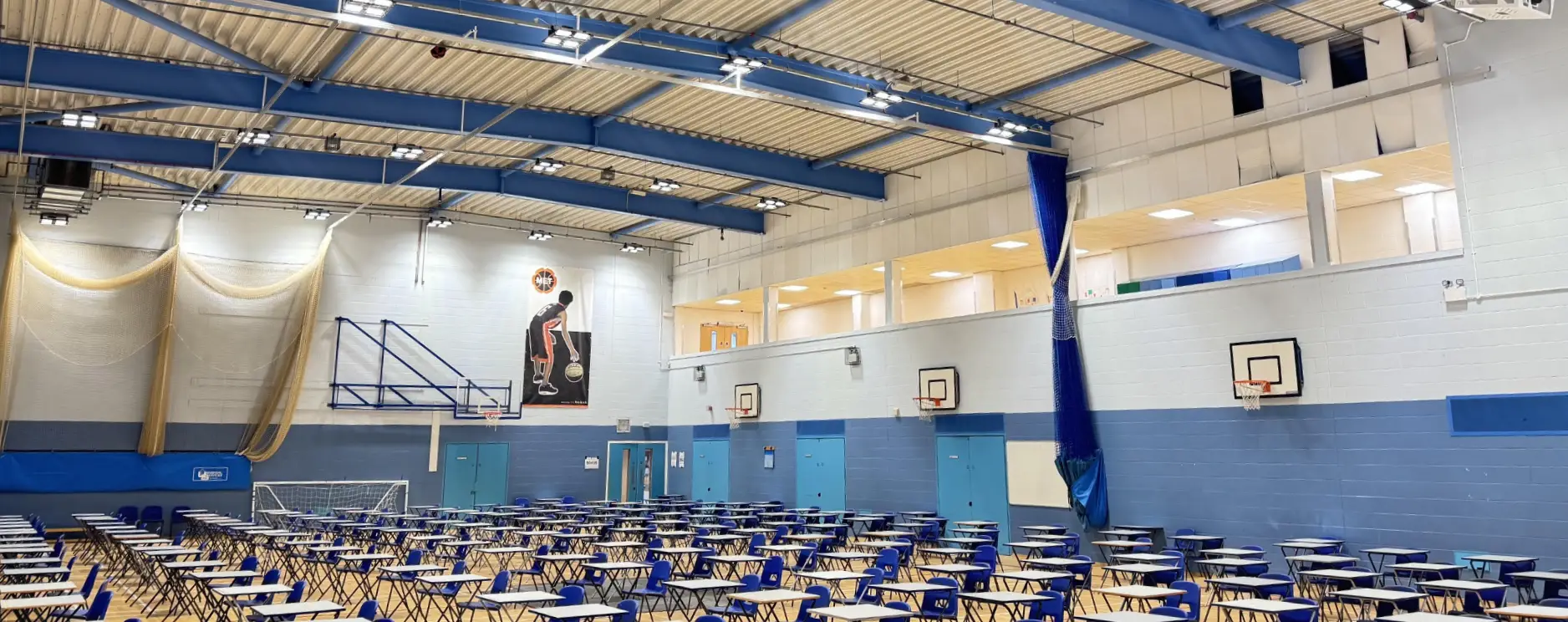
Older systems often use more electricity than modern LED alternatives. They also waste energy through poor zoning, limited switching and little or no daylight response. A classroom may be fully lit even when daylight is strong. Corridors, toilets, stores and shared spaces may stay lit long after they are empty. Sports halls, dining areas and staff spaces may be controlled in large groups rather than useful zones.
That matters because estate decisions need to work harder. The Department for Education’s sustainability and climate change strategy includes reducing emissions from education and care buildings as part of the move towards a more sustainable education estate. Lighting is only one part of that picture, but it is a practical area where inefficiency can be reviewed, measured and addressed.
Why old fluorescent lighting is becoming harder to ignore
Many schools still rely on fluorescent fittings installed years ago. Staff are used to them. Site teams know how they behave. But familiarity is not the same as long-term suitability.
Old fluorescent lighting in schools creates practical problems. Lamps fail. Diffusers become tired. Light quality varies from room to room. Replacement work can interrupt teaching spaces, require access equipment or create extra pressure for site teams. Stock availability also becomes more difficult as the market continues to move away from older lamp types.
There is also a wider regulatory and supply-chain context. The UK Government has confirmed that RoHS exemptions for several fluorescent lamp types expired on 1 February 2024, including examples such as T5, T8 and T12 double-capped linear fluorescent lamps. For schools, this does not mean every fitting changes overnight, but it does make old fluorescent lighting harder to ignore as a long-term maintenance strategy.
Maintenance costs add up over time
The cost of outdated lighting is not limited to electricity. Maintenance is often the quieter issue.
Old lighting rarely fails all at once. It creates a slow drip of work: lamps to replace, diffusers to clean or repair, control gear faults to investigate, high-level fittings that need access equipment and repeated visits to areas that never quite stay fixed.
Across a school estate, these jobs add up. Site teams are already managing heating, security, grounds, compliance checks, cleaning and day-to-day repairs. Every recurring lighting issue takes time away from other priorities. This is why working lighting can still be expensive lighting.
Poor lighting can affect the learning environment
Lighting quality matters because schools are active, varied environments. A classroom is not used in one way all day. Staff may need good visibility for written work, screen use, displays, presentations, group tasks, exams, cleaning and after-school activity.
When lighting is outdated, the problem is not always dramatic. It may simply make spaces feel dim, uneven or tired. Glare can make some areas uncomfortable. Flicker or inconsistent illumination may become irritating. Poor visibility on boards, screens or practical work areas can make rooms harder to use.
Lighting alone does not transform educational outcomes. But classroom lighting improvements can support comfort, visibility and usability, while helping spaces feel more cared for and easier to manage.
Lighting controls can reduce wasted energy
A school lighting upgrade is not only about replacing fittings. Controls make a major difference to how efficiently lighting is used each day.
Lighting controls for schools can include occupancy sensors, daylight harvesting, dimming, zoning and scene setting. In simple terms, they help lighting respond to the space. A corridor does not need to behave like a classroom. A toilet block does not need lights running constantly if it is empty. A sports hall may need different settings for lessons, exams, assemblies or evening use.
The best controls are practical. They reduce waste without making daily use more difficult for staff. That is where design and commissioning matter. Connected Light provides lighting control commissioning to help make sure systems are configured, tested and adjusted to suit the building.
The cost of waiting too long
Schools often delay lighting upgrades for understandable reasons. Budgets are tight, staff are busy and the system may still appear to work. In many cases, lighting is only reviewed when failures become frequent, rooms are refurbished or energy costs force a closer look.
The risk is that waiting reduces control over timing and cost. A planned upgrade can be surveyed, costed, phased and coordinated with school holidays, wider refurbishment work or estate priorities. A reactive replacement is usually more awkward, with fewer options and less opportunity to think about controls, emergency lighting, energy use or long-term maintenance.
The Department for Education’s guidance on good estate management for schools highlights the importance of managing school buildings effectively to save money and support safe, sustainable environments.
How schools can plan lighting upgrades without major disruption
One reason schools delay lighting work is the fear of disruption. Classrooms are occupied, corridors are busy, safeguarding has to be considered and spaces such as halls, dining areas and sports facilities are often used beyond the normal school day.
The answer is planning. A lighting survey can identify which areas need attention first, which fittings are causing the greatest problems and where energy efficient lighting for schools will deliver the most practical value. From there, upgrades can be phased around high-use areas, holiday periods, weekends or out-of-hours working where appropriate.
Connected Light supports schools with professional lighting design and turn-key project solutions that bring survey, specification, supply, installation, commissioning and handover into one planned process. At Frampton Cotterell Primary School, Connected Light completed a lighting upgrade during the summer holiday period, improving illumination while helping reduce safety risks and disruption.
What to review before upgrading school lighting
Before committing to LED lighting upgrades for schools, it is worth building a clear picture of the existing system. A useful review should look beyond whether the lights still turn on.
Start with the main fitting types across classrooms, corridors, halls, toilets, dining areas, external routes and specialist spaces. Check maintenance records, repeated faults, contractor visits and areas where lighting quality has become poor or inconsistent. Energy use should be considered alongside hours of operation, control arrangements and whether lights are often left on in empty rooms.
Emergency lighting should not be left out, especially if layouts, occupancy patterns or fire risk assessments have changed. Controls and sensors should also be reviewed where better zoning, daylight response or occupancy detection could reduce wasted energy. Finally, timing matters. Future refurbishment plans, funding cycles, decarbonisation priorities and term dates can all influence the best route forward.
Why you can trust Connected Light
Connected Light brings more than 40 years of lighting experience to education, commercial and public-sector projects. Our team understands that schools need practical advice, not generic promises. Lighting upgrades must work around budgets, building use, safety, compliance and the daily rhythm of education sites.
That experience includes measurable education projects. At Bradley Stoke Community School, a lighting upgrade delivered first-year savings of £21,428, a 4.5-year payback and a 65% classroom energy saving. At UWE The Foundry, high-efficiency LED lighting was supported by sensors and smart controls.
When to speak to a school lighting specialist
A school lighting specialist can be useful when existing lighting is ageing, unreliable, costly to run or difficult to maintain. It is also worth seeking advice when classrooms feel dim or inconsistent, controls no longer suit how spaces are used, or planned refurbishment work creates an opportunity to review lighting properly.
Compliance concerns are another important trigger. If emergency lighting has not been reviewed recently, building layouts have changed or responsibilities are unclear, professional support can help schools understand what needs attention.
If your school is reviewing outdated lighting, Connected Light can help assess your current system and plan practical education lighting upgrades. Learn more about our lighting solutions for schools.