


Customised Retrofit Gear Tray Solutions?
Emergency lighting can look operational and still fail to provide the illuminance needed for safe evacuation. Photometric verification for emergency lighting is the measured, evidence-based process that confirms your system delivers the required light levels in the real building, not just in the design file.
Connected Light provides photometric verification as a dedicated service for building owners, responsible persons, facilities managers, consultants and contractors who need clear, documented proof that their emergency lighting performs as intended. The service supports compliance with BS 5266-1:2025 and BS EN 1838, while providing practical records for BAFE documentation, building handover and five-year re-verification.
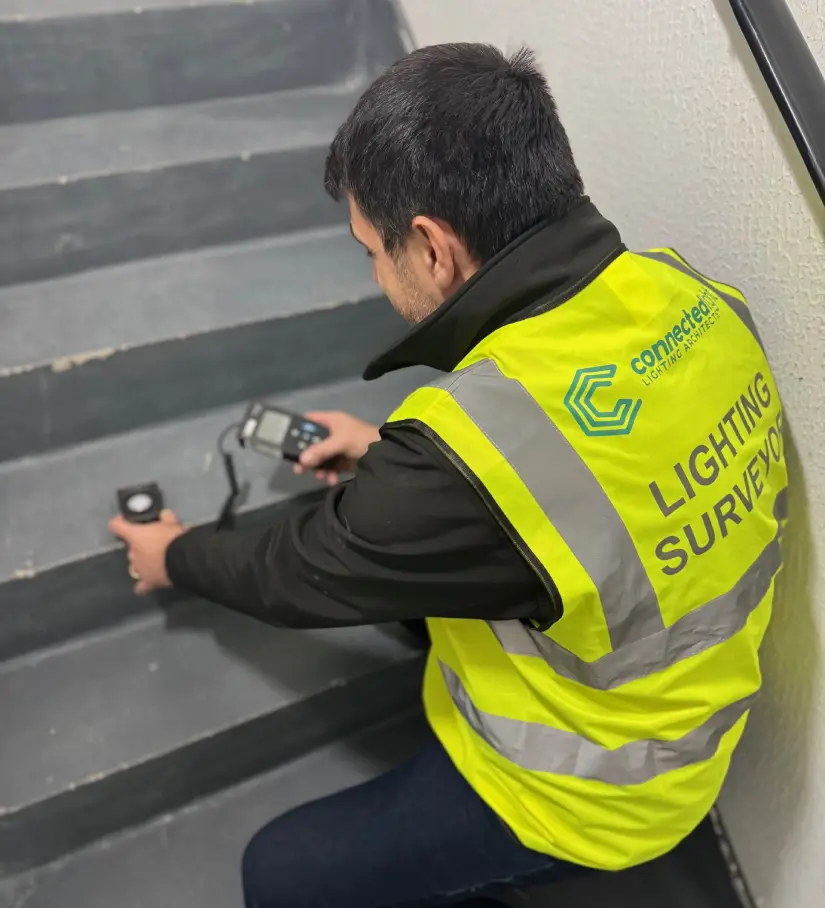
This is not a routine functional test. It is a measured verification process using approved light meters, carried out at defined grid points across the building, assessed against the relevant standards and recorded as clear evidence of system performance.
Why photometric verification matters
Routine emergency lighting testing confirms that emergency luminaires activate when mains power fails and continue to operate for the required duration. What it does not confirm is whether the light reaching escape routes, open areas, high-risk task areas and key points meets the levels required by the relevant standards. A system can pass every functional test and still fall short when illuminance is properly measured.
Performance can reduce gradually over time. Luminaires degrade, batteries age, fittings are replaced with products that have different photometric distributions, and building layouts change in ways that affect light coverage. Redecoration can alter surface reflectance. New partitions can create shadowing. A system that was compliant at handover may no longer provide adequate coverage several years later. Without measured verification, there is no reliable way to know.
Photometric verification closes that gap. It provides measured proof that your system delivers the required illuminance at the task plane and across the relevant floor areas. This gives you evidence that can be held on file, presented to building control and relied upon during inspection, audit or incident review. As part of Connected Light’s designed emergency lighting projects, photometric verification is already included within the final BAFE emergency lighting certification process. It is now also available as a standalone service for existing buildings.
What is photometric verification?
Photometric verification for emergency lighting involves taking measured illuminance readings at defined grid points throughout the relevant areas of a building, using calibrated, approved light meters. Those readings are then compared against the minimum criteria set out in the applicable standards.
The measurement grid follows BS 12464 methodology, with grid ratios determined by the type and size of each space. This ensures the process is proportionate and specific to the building, rather than applied as a generic survey method. Readings are assessed against the minimum illuminance and uniformity requirements for escape routes, open areas, high-risk task areas and points of emphasis, such as fire alarm call points and manual door releases.
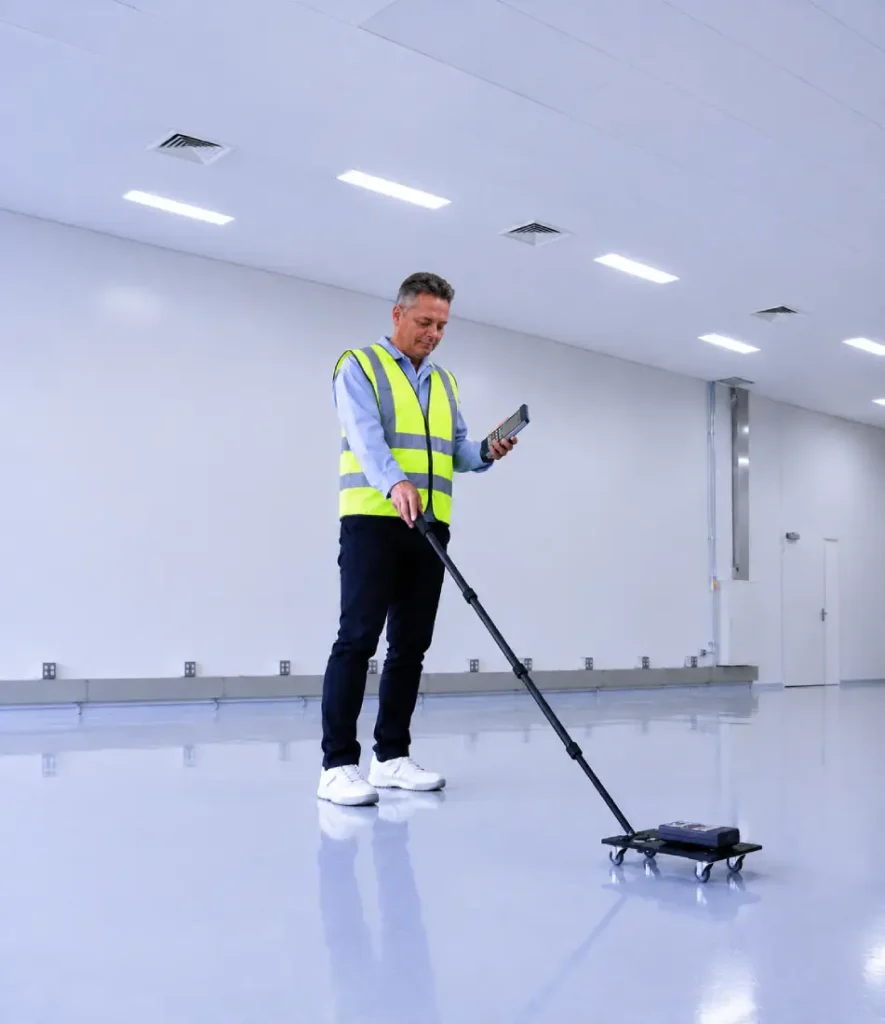
The work is more technically demanding than it may first appear. Accurate readings require emergency lighting performance to be isolated from ambient light sources, so surveys are usually carried out during hours of darkness or under controlled conditions outside normal operating hours. Approved instrumentation is required, and the recording of results must be systematic, traceable and auditable. Connected Light carries out this work with the same technical rigour applied to its emergency lighting design and BAFE-certified verification services.

When is photometric verification required
Initial photometric verification confirms that a newly designed or installed emergency lighting system achieves the required light levels before it is handed over to the responsible person. This forms part of the acceptance evidence and is included within Connected Light’s designed projects as part of the final BAFE SP203-4 sign-off.
BS 5266-1:2025 and BS EN 1838 require photometric performance verification to be repeated at intervals not exceeding five years. This applies to existing systems and helps confirm that performance has been maintained as the building, luminaires and emergency lighting equipment age over time.
Changes to the building layout, use of spaces or surface finishes can significantly affect emergency lighting coverage. Re-verification confirms that the system continues to meet the required criteria following any material change to the building.
Replacement fittings may have different photometric distributions from the original luminaires. Even like-for-like replacements can introduce variation. Verification confirms that the updated installation continues to perform as required.
Buildings without adequate historic verification records have no clear documented baseline for compliance. A photometric survey establishes the current position and gives the responsible person a practical foundation for ongoing compliance management.
Where systems have been extended, upgraded or reconfigured, verification confirms that the modified installation meets the required criteria across the full scope of the affected areas.
The process
We begin by reviewing existing drawings, design information, emergency lighting records and any available compliance history. Relevant areas are identified and measurement grids are established for each space based on BS 12464 methodology, with grid ratios determined by the type and size of the area.
Accurate photometric verification requires conditions that isolate emergency lighting performance from ambient light sources. Testing is arranged during hours of darkness or under controlled lighting conditions, typically outside normal operating hours. Site access is coordinated in advance with the building owner, facilities team or appointed contractor.
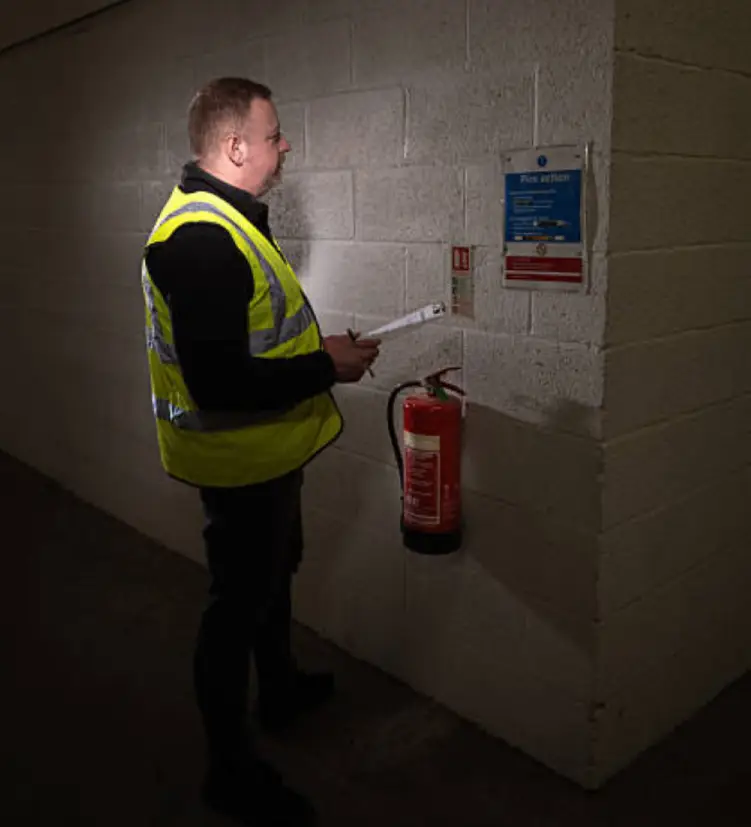
Readings are taken using approved, calibrated light meters at each defined grid point across escape routes, open areas, high-risk task areas and points of emphasis. Measurements are recorded systematically, with photographs used to document relevant conditions such as soiling, obstructions and circuit behaviour.
Readings are assessed against the minimum illuminance and uniformity requirements for each space type under the applicable standards. Any areas that fall below the required criteria are clearly identified, along with the nature of the shortfall and the likely cause.
A full written report is prepared covering all measurement results, pass or fail outcomes and practical remedial recommendations where required. Documentation is suitable for compliance records, project files or BAFE certification packs, and provides a clear audit trail for the responsible person or duty holder.
Photometric verification sits within a clear framework of UK and European standards that define how emergency lighting systems must perform and how that performance should be evidenced.
BS 5266-1:2025 is the current UK code of practice for the emergency lighting of premises. As the British Standards Institution confirms, the 2025 edition is more performance-based than its predecessor, with stronger requirements around verification, documentation and long-term system management. It is designed to be used alongside BS EN 1838 and BS EN 50172.
BS EN 1838 sets out the luminous requirements for emergency escape lighting and standby lighting, including minimum illuminance, uniformity and activation times for different space types. It is within this standard that the detailed requirements for initial verification and five-year repeat verification are established.
BS EN 50172 covers the minimum provision and installation requirements for emergency escape lighting systems, including the testing and maintenance obligations that support ongoing compliance.
The measurement methodology applied during photometric verification is informed by BS 12464, which provides guidance on grid ratios and measurement point placement. This helps ensure readings are taken correctly for each type and size of space.
Connected Light holds BAFE SP203-4 certification, providing third-party audited assurance that its emergency lighting services meet recognised industry benchmarks. Photometric verification carried out by Connected Light supports responsible persons in demonstrating due diligence and contributes to a complete, auditable compliance record. Further information on our wider emergency lighting compliance services and lux level surveys is available across our services pages.

Why choose Connected Light
BAFE SP203-4 certified: Connected Light is independently certified to deliver the full scope of emergency lighting services, including survey and report, design, verification and certification documentation.
Included in designed projects: Photometric verification is already part of the BAFE sign-off process for every emergency lighting project Connected Light designs and delivers. Standalone surveys draw on the same knowledge, standards and process.
Technical expertise: The team understands emergency lighting design, system performance and compliance obligations, not just the mechanics of taking readings. That knowledge shapes how surveys are planned, carried out and reported.
40 years of experience: Connected Light has worked across healthcare, education, industrial, defence, historic, commercial and retail environments, bringing practical knowledge of the real-world challenges each sector presents.
Clear, practical documentation: Survey reports are written for responsible persons and facilities teams, not just technical files. Results are explained clearly, shortfalls are identified and remedial recommendations are practical and actionable.
Flexible service: Available as a standalone survey or as part of a wider designed emergency lighting project, the service can be adapted to your building, compliance position and timescale.
Book a photometric verification survey
If your emergency lighting system needs initial verification, five-year re-verification or documented evidence for BS 5266-1:2025 compliance, Connected Light can help. Speak to our team to arrange a measured photometric verification survey and receive clear, practical documentation for your records.
Related case studies
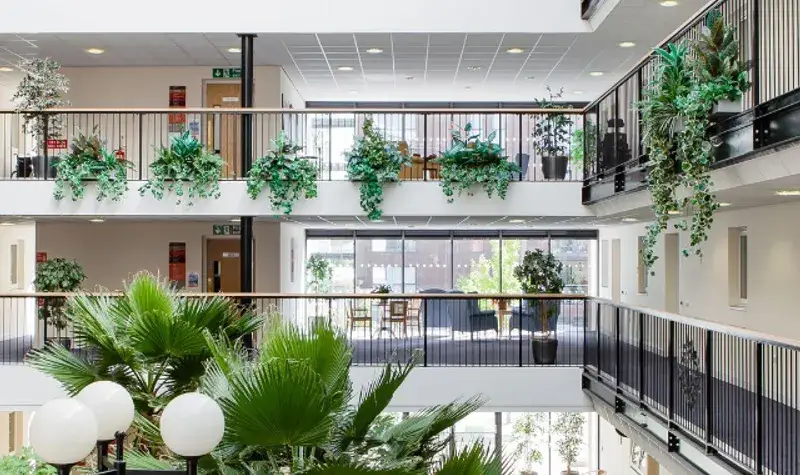
St Monica Trust
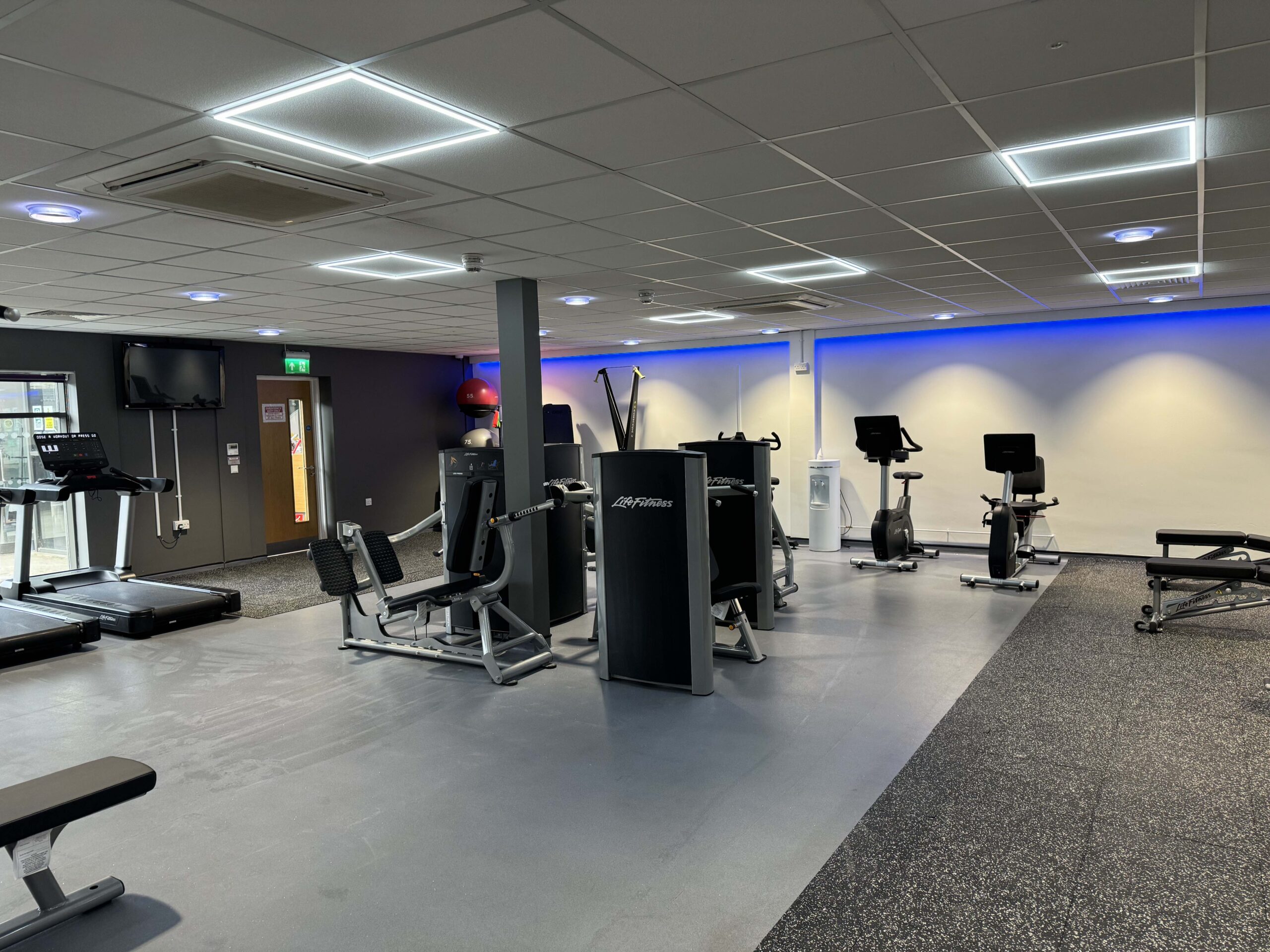
Somerdale Pavilion – Gym
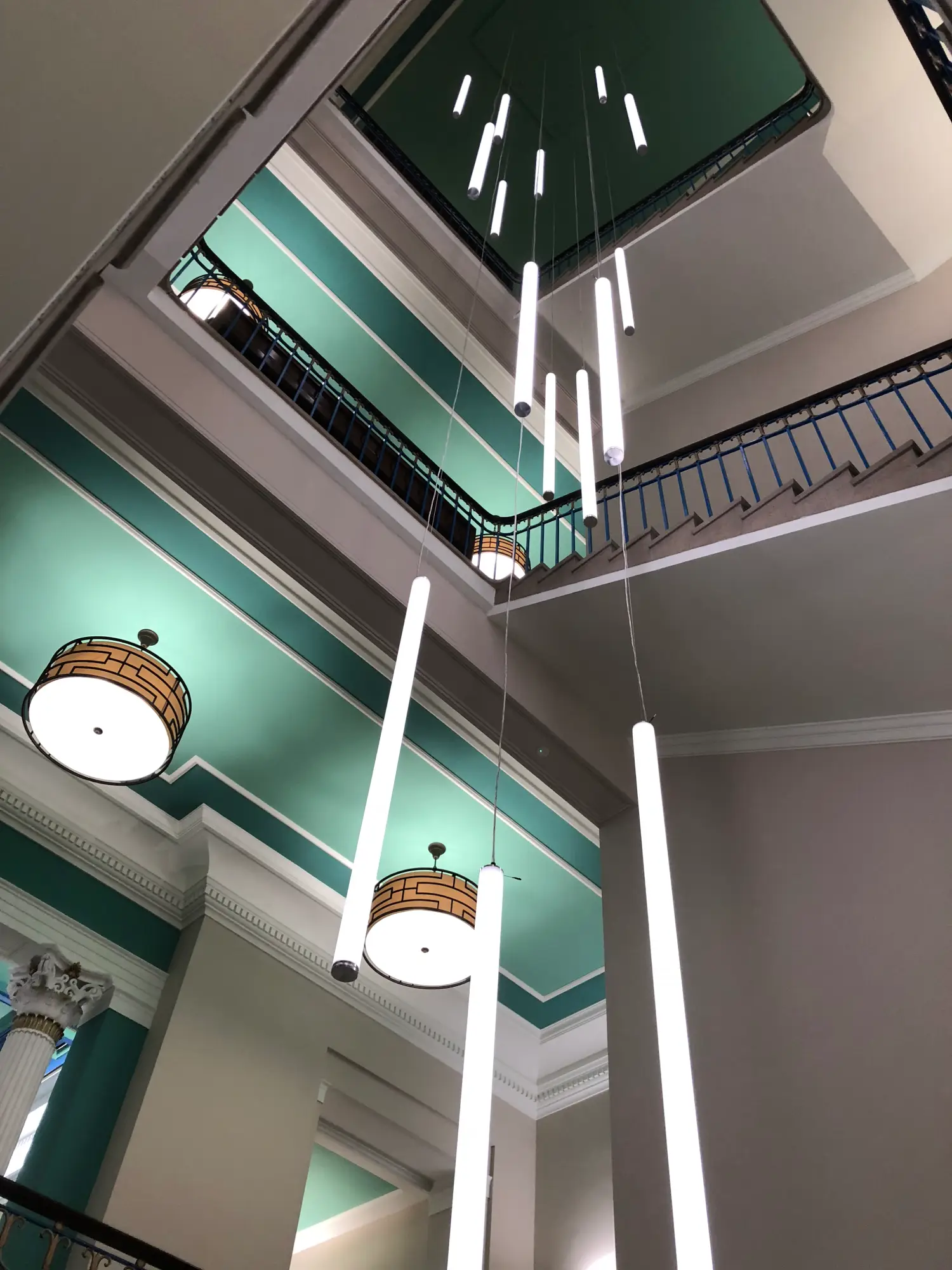
Upgrade at Freemasons’ Hall Enhances Heritage Experience

Connectedlight have worked for ETS designing and supplying lighting systems that deliver full turnkey projects repeatedly building up a valued trust between the companies.... Read More

We’re proud to collaborate with Connected Light, a team that shares our passion for smart, flexible, and future-ready lighting solutions. Their deep market knowledge and hands-on approach make them a perfect partner to bring the power of Casambi to projects across the UK.... Read More

As a long-standing partner of ConnectedLight, Signify Commercial UKI is proud to be associated with such an adaptable and innovative company. ConnectedLight's expertise in lighting services,... Read More
Connectedlight have worked for ETS designing and supplying lighting systems that deliver full turnkey projects repeatedly building up a valued trust between the companies. We have also been employed by Connectedlight upgrading lighting systems in many schools across the South.
Connectedlight engineers attention to detail is of a very high standing understanding the clients brief and looking at ways of energy saving and cost-effective installation. We have worked with various other lighting design companies, but Connectedlight definitely stand out in this area.
Their engineers and staff are professional, polite and keep you informed with updates on design and deliveries and will do whatever is required to succeed.
Their working accreditations reflect their quality of service and attention to detail. Construction Line Gold is a highly commended accreditation and requires a specific level of commitment, especially on health and safety and communicating between all parties involved. ETS Group have this accreditation and understands its level of difficulty to acquire.
Working with Connected Light Lighting Architects is a pleasure.
We’re proud to collaborate with Connected Light, a team that shares our passion for smart, flexible, and future-ready lighting solutions. Their deep market knowledge and hands-on approach make them a perfect partner to bring the power of Casambi to projects across the UK.
As a long-standing partner of ConnectedLight, Signify Commercial UKI is proud to be associated with such an adaptable and innovative company. ConnectedLight's expertise in lighting services, combined with Signify's cutting-edge technology and products, has resulted in a strong and dynamic partnership that consistently delivers outstanding lighting solutions. This collaboration has enabled us to provide our customers with sustainable lighting solutions, which have exceeded expectations in terms of efficiency, functionality, and aesthetics. We highly recommend ConnectedLight for their exceptional lighting services and look forward to continuing our partnership for many years to come.


